Physical Address
304 North Cardinal St.
Dorchester Center, MA 02124
Physical Address
304 North Cardinal St.
Dorchester Center, MA 02124

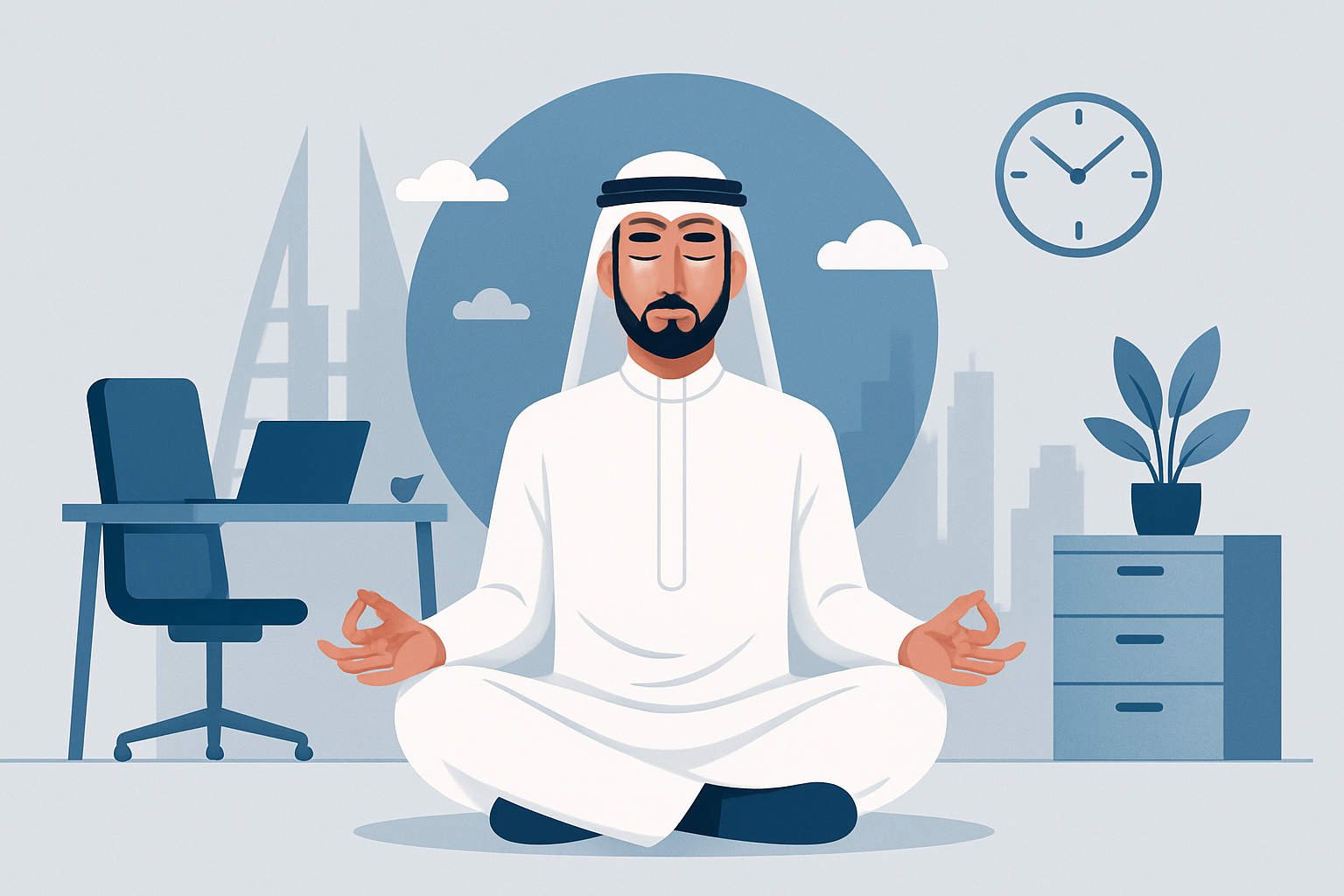
Mindfulness and Stress Reduction Techniques for Professionals in Bahrain Mindfulness and stress reduction techniques for professionals in Bahrain work best when...
Mindfulness and stress reduction techniques for professionals in Bahrain work best when practiced consistently during short daily breaks, using guided breath exercises and nature-based grounding routines that fit seamlessly into a Manama work schedule. By applying just ten focused minutes each day to these evidence-based practices, workers can significantly lower cortisol levels, improve decision-making, and maintain sustained productivity throughout the year.
The corporate environment in Bahrain continues to evolve rapidly as the kingdom advances its economic diversification goals and expands its digital infrastructure. Professionals navigating this landscape often face overlapping demands, including tight project deadlines, cross-cultural communication complexities, and the constant connectivity expected in modern leadership roles. Stress becomes particularly pronounced during peak business seasons when market activity intensifies across sectors like finance, logistics, healthcare, and technology. Recognizing these pressure points is the first step toward building sustainable mental resilience. Many employees report feeling overwhelmed by back-to-back virtual meetings, unclear role expectations, and the pressure to constantly prove their value in a competitive talent market. Addressing these challenges requires intentional strategies that align with both organizational culture and personal wellbeing priorities. As organizations navigate workforce expectations in 2026, leaders are increasingly recognizing that psychological safety directly impacts operational efficiency and client outcomes.
Mindfulness is not about emptying the mind or achieving permanent relaxation. It is a trainable skill that anchors attention to the present moment while observing thoughts without judgment. For professionals working across commercial districts in Manama, these practices can be scaled to fit fragmented schedules and high-stakes environments.
Traffic congestion along King Faisal Highway and Al Wudai Street creates natural opportunities to transform transit time into therapeutic practice. Instead of scrolling through industry news or responding to urgent emails, professionals can adopt the four-seven-eight breathing method during vehicle stops or public transport rides. Inhale quietly through the nose for four seconds, hold the breath for seven seconds, and exhale completely through the mouth for eight seconds. Repeating this cycle three times activates the parasympathetic nervous system, lowering heart rate and preparing the brain for focused work upon arrival. This technique requires no equipment and remains effective whether you are driving, riding a bus, or waiting for a taxi. Pairing this practice with ambient soundscapes featuring Gulf coast rhythms can further stabilize autonomic responses and improve mood before reaching the office.
The traditional hour-long meditation session is rarely feasible in today’s corporate rhythm. Micro-meditations offer a scientifically validated alternative that delivers comparable cognitive benefits when performed consistently. Set a silent timer for two minutes before stepping into each meeting. Place both feet flat on the floor, rest your hands lightly on your lap, and focus entirely on the sensation of air moving through your nostrils. When distractions arise, acknowledge them neutrally and return attention to your breath. This practice trains emotional regulation and prevents reactive decision making during high-pressure negotiations or performance reviews. Many executives now schedule these brief pauses directly into calendar invites to protect mental bandwidth throughout the week. Studies confirm that repeated short-form meditation strengthens neural pathways associated with impulse control and cognitive flexibility.
Consistency matters more than duration when it comes to workplace wellness. Building a predictable mindfulness routine helps the nervous system adapt to stress rather than collapse under it. Professionals who integrate these habits into their daily workflow report sharper concentration, reduced burnout symptoms, and improved interpersonal dynamics.
Bahrain has invested heavily in public health initiatives and private wellness centers over recent years. Corporations operating in Seef, Adliya, and Juffair frequently sponsor access to on-site counseling, yoga studios, and digital therapy platforms. Employees should take advantage of employer-sponsored programs before seeking external solutions. If your organization does not yet offer structured mental health support, consider recommending certified local providers to human resources leadership. Participating in group mindfulness workshops organized by fitness chains or community centers also builds social accountability, which increases long-term adherence. Regular attendance at these sessions creates a supportive network that normalizes psychological care as a standard component of professional development. Companies that institutionalize these resources consistently demonstrate lower turnover and higher employee engagement scores.
Constant connectivity blurs the boundary between professional responsibilities and personal recovery time. The average knowledge worker in the Gulf receives over ninety digital notifications during standard working hours, fragmenting attention and elevating baseline anxiety. Establish clear boundaries by designating notification-free windows each evening. Use built-in smartphone features to block work-related apps after a set hour, and physically store your device outside your immediate workspace during family dinner or weekend outings. Implement a twenty-four-hour rule for non-urgent emails received after business hours. Communicate these parameters calmly to colleagues and supervisors during performance planning cycles. Organizations that respect offline periods consistently report higher retention rates and stronger team cohesion. Digital detox weekends also allow the brain to reset dopamine receptors, restoring enthusiasm for complex problem solving when returning to scheduled tasks.
Mental wellness is not separate from career progression. It is the foundation that enables consistent performance, ethical leadership, and long-term professional satisfaction. When stress management becomes part of your daily workflow, you naturally become a more effective collaborator and decision maker.
The right workplace amplifies your ability to maintain balance. During your next job search, look for organizations that explicitly mention psychological safety, flexible scheduling, and mental health allowances in their employment packages. Review company profiles on leading recruitment portals and ask hiring managers how they support employee resilience during high-intensity quarters. Transparent employers welcome conversations about workload distribution and preventative mental care. If your current position lacks structural support, updating your candidate materials may be necessary to find a healthier environment. You can explore curated jobs in Bahrain to filter listings by companies with verified wellness policies and transparent compensation structures. Evaluate job descriptions for mentions of mandatory downtime, conference stipends for psychological training, and leadership coaching. Employers who invest in holistic employee development consistently outperform peers in market volatility.
Implementing change does not require a complete lifestyle overhaul. Start with one breath exercise during your morning routine, add one micro-meditation before your most demanding meeting, and designate one evening without screens. Track your energy levels and focus quality for thirty days to observe measurable improvements. As you build confidence in these methods, gradually expand your toolkit to include journaling, progressive muscle relaxation, or guided visualization. Remember that consistency compounds over time, creating lasting neurological adaptations that enhance both productivity and life satisfaction. To secure positions that align with your mental health values and professional ambitions, simply create your free profile and connect with recruiters who prioritize sustainable career growth. Regularly revisiting your stress triggers and adjusting your coping strategies ensures long-term adaptation to shifting market conditions.
What is the most effective mindfulness technique for reducing acute workplace stress? Box breathing combined with ground sensory awareness produces the fastest physiological calm. Practicing this for two minutes during a stressful moment lowers cortisol within ninety seconds and restores prefrontal cortex function for clearer reasoning.
Can mindfulness practices improve career advancement opportunities in Bahrain? Yes, professionals who regulate stress effectively demonstrate stronger leadership qualities, better conflict resolution skills, and higher adaptability during organizational change. These traits consistently accelerate promotion cycles and increase eligibility for senior management roles.
How much time per week is required to see measurable mental health benefits from mindfulness? Clinical research confirms that forty minutes of dedicated practice distributed across five days yields significant reductions in anxiety and burnout markers. Even shorter daily sessions of ten to twelve minutes produce sustained improvements when maintained consistently throughout the year.