
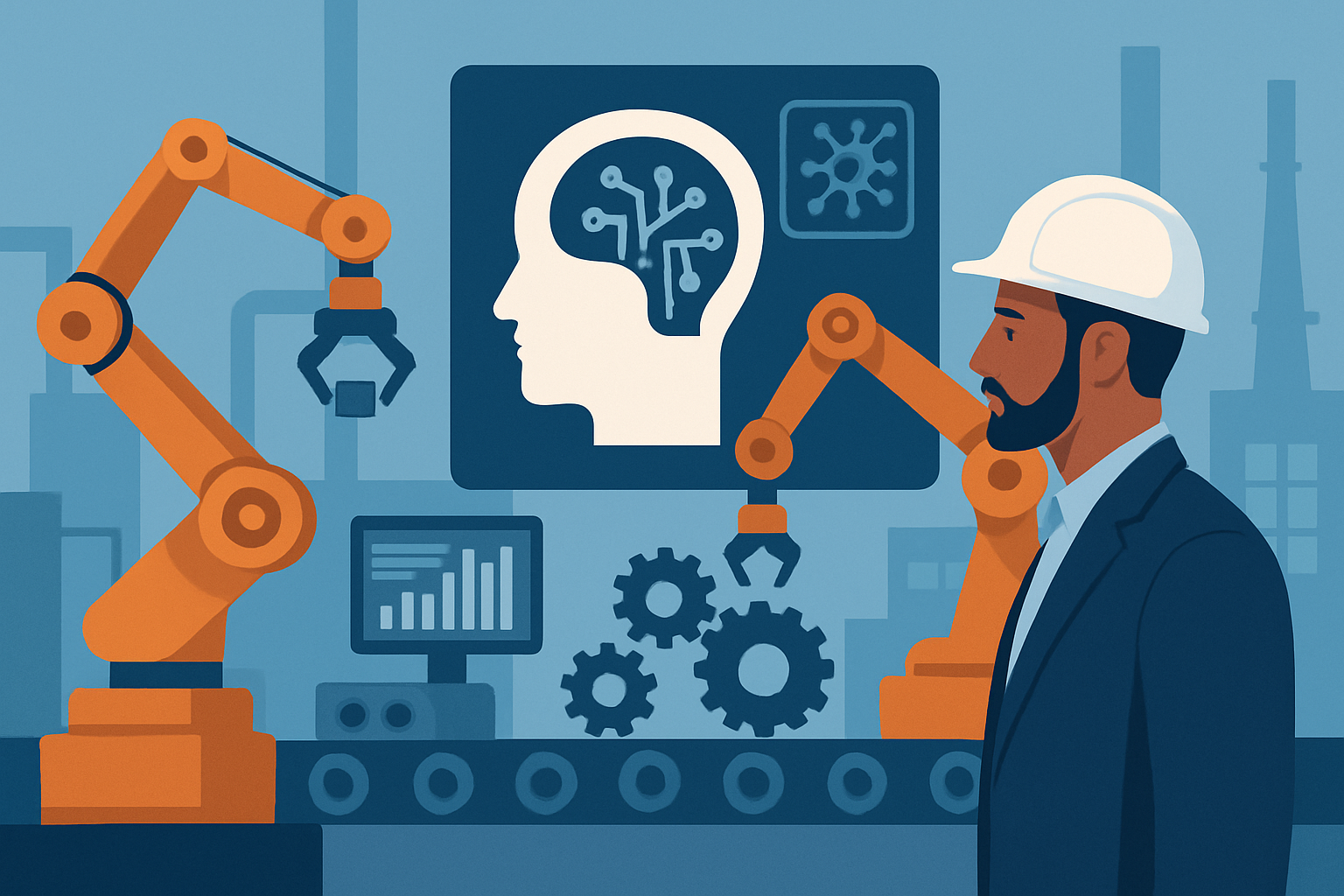

AI in Manufacturing and Industry 4.0: Career Opportunities Rising Fast
AI in Manufacturing and Industry 4.0: Career Opportunities Rising Fast
Artificial Intelligence is rapidly transforming global manufacturing through predictive maintenance, generative design, and autonomous supply chains, creating a surge in high-demand roles across the sector. Professionals pursuing industrial AI careers are seeing unprecedented growth, particularly within industry 4.0 jobs that bridge operational technology and data science. According to DrJobPro AI Hub data from May 2026, companies hiring for ai manufacturing specialists have increased by 42 percent year-over-year, driven by urgent needs for automation integration and smart factory implementation. This article analyzes current market trends, essential skill sets, and salary benchmarks to guide candidates navigating this expanding landscape. Related article
Key Takeaways
- Market Surge: Global demand for industrial AI careers has grown 42% YoY, with manufacturing leading enterprise adoption.
- Hot Roles: Top industry 4.0 jobs include Predictive Maintenance Engineers, AI Robotics Specialists, and Smart Factory Architects.
- Salary Premium: AI-focused manufacturing roles command compensation premiums up to 35% above traditional engineering salaries.
- Skill Evolution: Success requires hybrid expertise in OT/IT convergence, edge computing, and generative AI for process optimization.
- Regional Growth: The Middle East is accelerating recruitment as national visions drive digital transformation in local industries.
Last Reviewed: May 21 | Sources: DrJobPro AI Hub Data, Industry Reports 2026
The Current State of AI in Manufacturing: Trends Driving Growth
The manufacturing sector is undergoing a fundamental shift characterized by the convergence of physical and digital systems. This transition defines the third phase of industrial automation, commonly known as Industry 4.0. Organizations are moving beyond isolated automation projects toward fully interconnected ecosystems where machines communicate, analyze data, and make decisions with minimal human intervention.
Generative AI Reshaping Production Workflows
Related: HR Manager Jobs in Jordan 2026 — Compensation 
Generative AI has evolved from a novelty into a core operational tool. Manufacturers are deploying large language models to automate documentation, optimize maintenance schedules, and accelerate R&D cycles. Engineering teams now use generative design algorithms to explore thousands of part configurations based on material constraints and performance goals, resulting in lighter, stronger components produced at lower costs. This capability is reducing product development time by an average of 30 percent across early adopter firms.
Digital Twins and Simulation Technologies
Digital twins have become indispensable for risk mitigation and efficiency gains. By creating virtual replicas of physical assets, production lines, and entire facilities, operators can simulate scenarios, predict bottlenecks, and test changes before implementation. Real-time data ingestion allows these twins to mirror live operations, enabling dynamic adjustments to parameters such as temperature, pressure, and throughput. Companies utilizing advanced simulation capabilities report downtime reductions exceeding 25 percent and significant improvements in overall equipment effectiveness.
Computer Vision and Quality Assurance
Automated optical inspection powered by deep learning has replaced manual quality checks in high-volume environments. Convolutional neural networks analyze video feeds from production lines to detect micro-defects, surface imperfections, and assembly errors with greater accuracy than human inspectors. These systems operate continuously without fatigue, ensuring consistent product standards while freeing skilled technicians to focus on complex problem-solving tasks.
High-Growth Roles and Industry 4.0 Jobs Landscape
Related: Zurich Jobs: Top Openings & Career Guide
The rapid adoption of intelligent technologies is generating diverse employment opportunities. Employers are seeking candidates who can navigate the intersection of mechanical engineering, software development, and data analytics. Understanding the hierarchy of roles helps job seekers target positions aligned with their expertise.
Core Technical Positions
Predictive Maintenance Engineers monitor sensor data streams to forecast equipment failures before they occur. These specialists develop algorithms that correlate vibration, thermal, and acoustic signatures with historical failure modes. Their work minimizes unplanned outages and extends asset lifespans, delivering direct ROI to manufacturing clients.
AI Robotics Specialists design and deploy collaborative robots capable of adapting to dynamic environments. This role requires proficiency in robotics operating systems, motion planning, and reinforcement learning. Specialists program manipulators to handle unstructured objects, assist human workers, and perform precision assembly tasks in logistics centers and final assembly lines.
Edge Computing Engineers implement low-latency processing solutions at the point of data generation. As manufacturing sites generate terabytes of information daily, transmitting all data to centralized clouds introduces unacceptable delays. These engineers architect distributed compute frameworks that run inference models directly on gateways and controllers, ensuring real-time responsiveness for safety-critical applications.
Strategic and Leadership Roles
Smart Factory Architects oversee the holistic integration of AI systems across complex facilities. They evaluate existing infrastructure, select appropriate vendors, and design roadmaps for digital maturity. This position demands strong project management abilities combined with technical foresight regarding interoperability standards and cybersecurity protocols.
Chief AI Officers in manufacturing organizations establish governance frameworks for ethical algorithm deployment. They align AI strategy with business objectives, manage data quality initiatives, and foster cultures of innovation. Executives in this space collaborate closely with operations leaders to identify high-value use cases and secure investment for pilot programs.
For professionals looking to expand their networks and exchange best practices, engaging with peer groups is invaluable. Join the DrJobPro AI Hub Community to connect with other practitioners, access exclusive discussions, and stay updated on emerging hiring signals across the sector.
Essential Skills for Success in Industrial AI Careers
Employers prioritize candidates who demonstrate both breadth and depth in relevant competencies. Building a compelling profile requires continuous upskilling and practical application of knowledge.
Technical Proficiencies
Candidates should master programming languages frequently used in automation contexts, including Python for scripting and model development, C++ for performance-intensive applications, and SQL for database management. Familiarity with version control systems like Git is mandatory for collaborative development workflows. Knowledge of containerization technologies such as Docker and Kubernetes enables seamless deployment of models across heterogeneous hardware environments.
Proficiency in machine learning frameworks like TensorFlow, PyTorch, or scikit-learn remains foundational. Applicants must understand classical statistics, regression techniques, and classification algorithms alongside advanced deep learning architectures. Experience implementing computer vision pipelines or natural language processing tools provides a competitive advantage for specialized roles.
Domain Knowledge and Soft Skills
Understanding industrial protocols like OPC UA, MQTT, and Modbus facilitates effective communication between IT and operational technology teams. Awareness of safety standards and regulatory compliance requirements ensures that proposed solutions meet rigorous industry criteria.
Communication skills are equally critical. Technologists must translate complex analytical results into actionable insights for non-technical stakeholders. Problem-solving agility allows professionals to adapt quickly when new data reveals unexpected patterns or when system constraints change. Emotional intelligence supports teamwork in cross-functional environments where diverse disciplines converge.
Certifications and Credentials
Recognized certifications validate expertise and signal commitment to professional development. Credentials in cloud platforms, industrial IoT, and project management enhance employability. Participating in hackathons, contributing to open-source repositories, and publishing case studies on personal portfolios provide tangible proof of capability. DrJobPro recommends verifying training providers against accredited industry bodies before enrollment.
Salary Benchmarks and Market Comparison
Compensation in the AI manufacturing sector reflects the scarcity of qualified talent and the high value delivered by automated systems. Data aggregated from active listings reveals significant variances based on role specialization, geographic location, and experience level. The following table outlines representative ranges for key positions.
| Role Category | Specific Position | Experience Tier | Average Salary Range (Annual) | Demand Score |
|---|---|---|---|---|
| Engineering | Predictive Maintenance Specialist | Mid-Level | $95,000 – $125,000 | 96/100 |
| Engineering | AI Robotics Engineer | Senior | $130,000 – $175,000 | 92/100 |
| Architecture | Smart Factory Architect | Lead | $150,000 – $210,000 | 89/100 |
| Data Science | Machine Learning Operations Engineer | Mid-Level | $110,000 – $145,000 | 94/100 |
| Management | Director of Manufacturing Automation | Executive | $180,000 – $250,000+ | 87/100 |
| Specialized | Edge AI Deployment Specialist | Entry-Mid | $85,000 – $115,000 | 91/100 |
Salaries in regions with concentrated manufacturing hubs and aggressive talent retention programs tend to exceed these baselines. Equity packages and performance bonuses are increasingly common in startups and scale-ups disrupting traditional processes. Candidates negotiating offers should consider total compensation structures, including benefits related to continuous education and flexible work arrangements.
Regional Spotlight: AI Manufacturing in the Middle East
The Middle East has emerged as a focal point for industrial modernization, driven by strategic government initiatives aimed at economic diversification. National visions mandate substantial investments in digital infrastructure, fostering a fertile environment for industry 4.0 jobs.
Saudi Arabia and the United Arab Emirates are spearheading large-scale projects that integrate AI across oil and gas, construction, food processing, and aerospace sectors. Public and private entities are establishing innovation districts, testing zones, and research partnerships to accelerate technology transfer. Local manufacturers face pressure to adopt smart practices to remain globally competitive, resulting in heightened recruitment activity for specialized profiles.
Initiatives supporting localization have created pathways for domestic talent to enter high-tech roles. Training programs designed in collaboration with universities and industry consortia aim to build capacity among younger demographics. Expatriate experts continue to play a vital role in knowledge transfer, making relocation opportunities attractive for international professionals willing to contribute to regional development goals.
Companies operating in the Gulf region emphasize cultural alignment alongside technical competence. Successful candidates demonstrate adaptability, respect for local business customs, and a willingness to engage with diverse, multicultural teams. Language skills in Arabic can provide additional leverage for roles involving stakeholder management or customer-facing responsibilities.
Navigating the Hiring Process with AI Tools
Candidates can leverage artificial intelligence to streamline their job search and optimize application materials. Modern applicant tracking systems utilize natural language processing to rank resumes based on keyword relevance and semantic meaning. Tailoring documents to match job descriptions improves visibility and increases interview chances.
Resume builders equipped with AI features analyze drafts against target roles and suggest improvements for clarity, impact, and formatting. Portfolio generators help engineers showcase project outcomes with structured metrics and interactive demos. Skill gap analyzers compare existing qualifications against market requirements, highlighting areas for immediate improvement.
Recruiters are also adopting screening assistants to reduce administrative burdens. Interview scheduling bots coordinate calendars efficiently, while video assessment platforms evaluate responses for communication effectiveness and technical reasoning. Understanding these mechanisms empowers applicants to present themselves competitively and manage interactions with greater confidence.
Future Outlook and Emerging Opportunities
Looking ahead, several developments will shape the trajectory of industrial AI careers. The integration of quantum computing promises to solve optimization problems currently intractable for classical processors, potentially revolutionizing supply chain logistics and material discovery. Advances in neuromorphic hardware may enable ultra-low-power sensors capable of sophisticated inference at the edge, further decentralizing decision-making.
Sustainability will remain a primary driver of innovation. AI systems will increasingly optimize resource consumption, minimize waste, and extend product durability to support circular economy principles. Regulatory frameworks around algorithmic transparency and data sovereignty will evolve, requiring professionals to adhere to stricter governance standards.
Human-machine collaboration will deepen as cobots become more intuitive and expressive. Interfaces leveraging augmented reality and voice commands will empower operators to interact seamlessly with intelligent systems. Lifelong learning will become a permanent expectation, as technological obsolescence cycles shorten and new paradigms emerge regularly. Professionals who cultivate curiosity and resilience will thrive in this dynamic ecosystem.
Frequently Asked Questions
What defines an industry 4.0 job?
An industry 4.0 job involves the application of cyber-physical systems, the Internet of Things, and artificial intelligence to manufacturing and production processes. These roles typically require blending traditional engineering knowledge with digital skills to design, implement, or manage smart systems that enhance efficiency and autonomy.
Which industries offer the most opportunities in ai manufacturing?
The strongest demand exists within automotive, aerospace, pharmaceuticals, consumer electronics, and heavy machinery. Energy and utilities sectors are also ramping up adoption for grid management and exploration activities. Logistics and warehousing represent adjacent fields with overlapping skill requirements and abundant openings.
Is a computer science degree required for industrial AI careers?
While formal degrees provide a strong foundation, they are not always mandatory. Employers increasingly value demonstrable skills and relevant certifications. Candidates with backgrounds in electrical, mechanical, or chemical engineering who supplement their domain expertise with programming and data science training can compete effectively for specialized positions.
How does AI impact entry-level roles in manufacturing?
AI automates routine tasks such as data entry, basic inspection, and repetitive machine operation, shifting entry-level responsibilities toward oversight, exception handling, and system monitoring. New apprenticeships focus on human-machine interaction, troubleshooting automated workflows, and continuous improvement methodologies. Early-career professionals gain exposure to cutting-edge tools earlier in their trajectories.
What steps should I take to prepare for the AI hiring boom?
Start by auditing your current skills against target job descriptions. Pursue targeted courses in machine learning, cloud platforms, and industrial communication protocols. Build practical projects using open datasets or simulator environments to demonstrate capability. Network actively through industry forums and professional associations to uncover hidden opportunities and gain referrals. Maintain a portfolio that highlights measurable impacts and technical rigor.
Launch Your Career in Industrial Innovation
The convergence of artificial intelligence and manufacturing represents one of the most significant economic shifts of the decade. Organizations are investing heavily to secure the talent required to lead this transformation. Securing a position in this space offers long-term stability, competitive compensation, and the chance to work on projects that redefine global productivity.
Don’t let opportunity pass you by. Access the latest verified listings and connect directly with top employers actively building the factories of tomorrow. Explore dedicated roles and advance your trajectory today by visiting the DrJobPro AI Hub Talent portal.














