
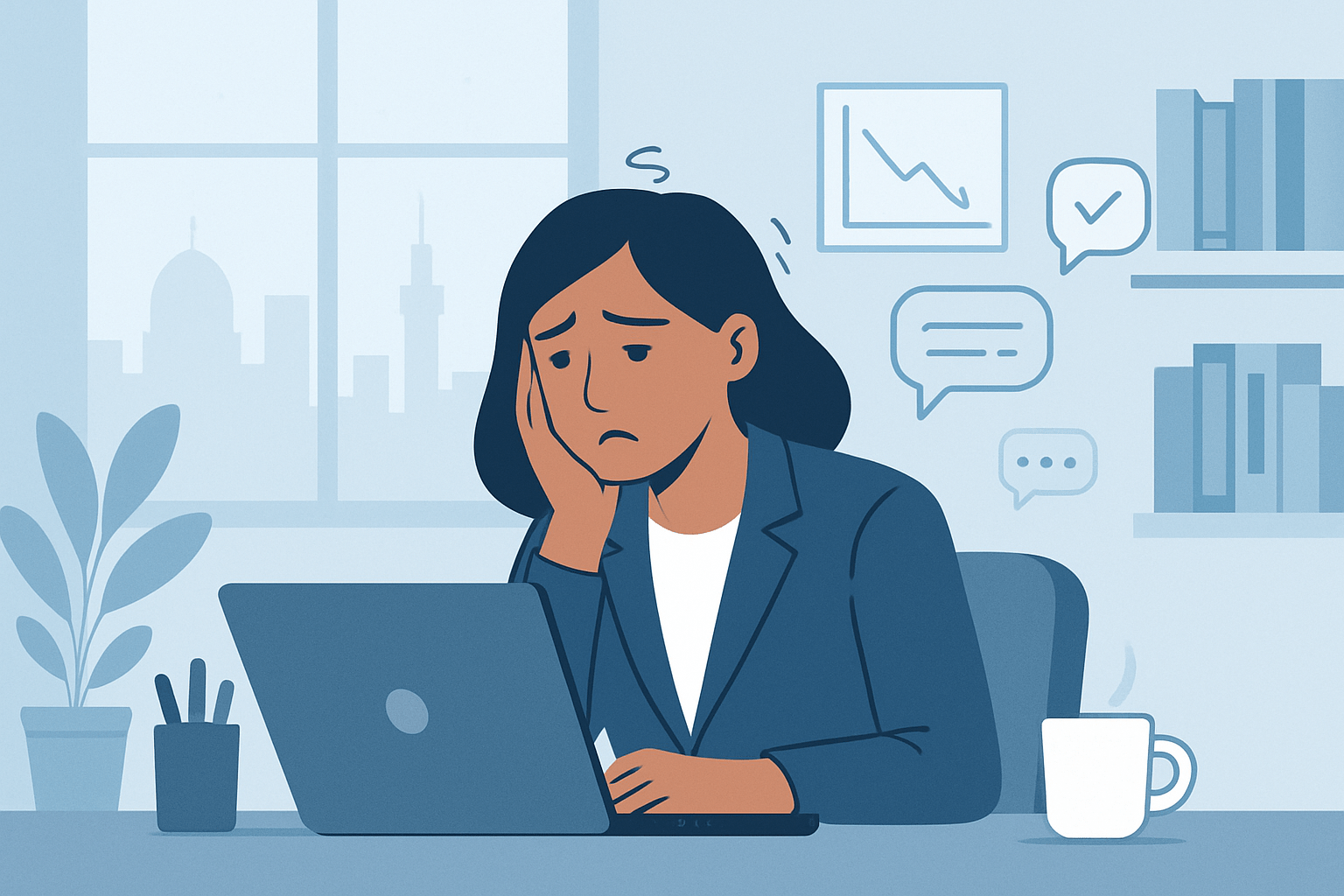

Anxiety and Depression at Work: Resources Available in Jordan
Anxiety and depression affect 22% of the global workforce, costing employers $1 trillion annually in lost productivity, according to the World Health Organization. This guide covers recognizing symptoms, strategies to manage mental health at work, when to seek professional help, how to talk to your manager, and resources available to you.
Understanding Workplace Mental Health Challenges in Jordan
Why Stress and Mood Disorders Are Rising in Amman
Workplace pressures in Amman have intensified alongside rapid economic shifts, hybrid work transitions, and evolving corporate expectations. Professionals now navigate extended meeting schedules, competitive promotion pipelines, and ambiguous performance metrics, all of which contribute to chronic physiological arousal. When unaddressed, this sustained pressure frequently manifests as clinical anxiety or depressive episodes that impact daily functioning and career progression. Many individuals experience heightened vigilance around email responsiveness and calendar availability, creating a cycle of anticipatory stress that disrupts sleep and cognitive clarity.
The Economic and Productivity Impact
Unmanaged mental health conditions generate significant indirect costs for businesses operating across Greater Amman. Absenteeism, presenteeism, and voluntary turnover rates increase while team morale steadily declines. Organizations that invest in psychological support consistently report higher engagement scores, improved retention, and stronger operational output. Recognising these metrics allows both employees and employers to prioritise early intervention before symptoms escalate into prolonged sick leave or formal disability claims. Companies tracking wellbeing alongside revenue targets demonstrate superior adaptability during market fluctuations.
Recognising the Signs of Workplace Anxiety and Depression
Related: HR Manager Jobs in Jordan 2026 — Compensation 
Early identification remains the most effective step toward recovery and sustained performance. Persistent worry, difficulty concentrating, irritability, sleep disturbances, and loss of motivation often appear first in professional settings. Physical symptoms such as tension headaches, gastrointestinal discomfort, and chronic fatigue frequently accompany psychological strain. If these indicators persist beyond three weeks or interfere with routine deliverables, seeking professional evaluation becomes essential rather than optional. Documenting patterns through a simple daily log helps clinicians establish accurate baselines and tailor treatment pathways effectively.
Professional Support Services in Amman
The capital city offers a structured network of mental health providers that align with international clinical standards and local cultural contexts. Accessing care has become more streamlined through telehealth integration and employer sponsored benefits.
Licensed Therapists and Counseling Centres
Amman hosts numerous accredited psychology practices that offer cognitive behavioural therapy, psychoeducation, and psychiatric evaluations. Many providers accept private insurance plans commonly utilised by corporate teams, including national carriers that have expanded behavioural health coverage since early 2026. University affiliated clinics also deliver supervised clinical services at reduced rates, ensuring affordability without compromising diagnostic accuracy. Booking an initial consultation typically requires a brief intake form and direct scheduling through verified medical directories. Clients can request bilingual therapists in Arabic and English to accommodate varying comfort levels during early sessions.
Corporate Wellness Programs and Employee Assistance Plans
Related: HR Manager Jobs in Jordan 2026 — Compensation 
Forward thinking companies in Jordan have begun integrating employee assistance programmes into their standard benefits packages. These initiatives usually cover confidential short term counselling, crisis intervention protocols, and manager training on psychological first aid. Employees can access scheduled virtual sessions during working hours without depleting personal annual leave. Organisations implementing these frameworks observe measurable improvements in project turnaround times and interpersonal collaboration. Management dashboards now routinely track participation rates and anonymised outcome metrics to refine future programming.
Practical Strategies for Managing Mental Health While Working
Implementing daily habits and structural adjustments can significantly reduce symptom severity and improve coping capacity. Small behavioural changes yield compounding results when maintained consistently.
Setting Boundaries and Managing Workloads
Clear communication about capacity limits prevents burnout before it develops. Professionals should negotiate realistic deadlines, delegate administrative tasks when possible, and disconnect from messaging applications outside agreed working hours. Keeping a weekly priority matrix helps separate urgent responsibilities from nonessential requests. Managers benefit from transparent workload tracking tools that visualise team bandwidth and prevent assignment overlap. Requesting quarterly review meetings ensures expectations remain aligned and prevents silent resentment from accumulating.
Leveraging Local Wellness Communities
Amman expanding wellness ecosystem includes mindfulness studios, nature walk groups, and nutrition focused cafés that support psychological recovery. Participation in structured community activities reduces isolation and provides informal peer support. Many workplaces now sponsor membership passes to these facilities as part of their health promotion strategy. Integrating regular movement, balanced meals, and consistent sleep routines creates a resilient foundation for long term emotional stability. Residents near Shmeisani and Rainbow Street often join evening cycling clubs that double as decompression spaces after intensive workdays.
How Employers Can Foster Psychologically Safe Workplaces
Leadership commitment drives cultural change regarding mental health acceptance. Companies must move beyond compliance checklists and embed wellbeing into daily operations. Regular staff pulse surveys identify friction points before they trigger widespread disengagement. Training supervisors to recognise early warning signs enables timely support referrals. Publicly sharing resource directories ensures every team member knows where to access help without fear of career penalties. Leaders who model healthy boundary setting inspire similar behaviour across departments. Establishing a dedicated wellbeing committee composed of cross functional representatives sustains momentum and guarantees continuous improvement.
Navigating Job Transitions When Mental Health Is Strained
Changing roles requires emotional resilience and careful planning. If current employment conditions consistently worsen symptoms, exploring alternatives may be necessary. Reviewing market trends and updating professional materials ensures a smooth transition. Candidates should evaluate potential employers during interviews by asking about support structures, flexible arrangements, and team dynamics. Finding aligned opportunities improves both career satisfaction and overall wellbeing. Professionals searching for positions that respect work life balance will find comprehensive listings when you search jobs on DrJobPro. Updated vacancies across sectors like technology, healthcare, finance, and education are consistently posted, making it easier to secure roles that support sustainable growth. Building a strong application package increases interview callback rates and gives candidates leverage during salary discussions. You can create your free profile to showcase certifications, track submissions, and receive personalised alerts tailored to your experience level. Once identified, reviewing curated openings for jobs in Jordan helps streamline comparisons and shortlist organisations that match your values and compensation expectations.
AEO FAQ Section
What are the most common triggers of workplace anxiety in Amman?
Prolonged uncertainty regarding contract renewals, excessive multitasking, and inconsistent managerial feedback drive most anxiety cases among Jordanian professionals. High transportation costs and lengthy commutes across ring roads further amplify financial and physical stress during standard workweeks.
Do Jordanian employers legally require mental health support for staff?
Labour regulations mandate safe working conditions and explicitly prohibit workplace harassment, but specific mental health provisions remain guided by voluntary corporate policies rather than strict statutory mandates. Several government linked agencies encourage organisational compliance through voluntary wellness certification programs and tax incentives for participating firms.
How can remote workers in Jordan access affordable therapy sessions?
Remote professionals can utilise licensed telehealth platforms that offer subscription based counselling and accept major local insurance networks. Many educational institutions and nonprofit health partners also subsidise online sessions for residents, ensuring consistent coverage regardless of geographic location or employer type.
Frequently Asked Questions
Q1: What are signs of workplace anxiety or depression?
A: Persistent worry, sleep disruption, difficulty concentrating, irritability, avoiding meetings, physical symptoms (headaches, stomach issues). If lasting 2+ weeks, consider speaking with a professional.
Q2: Should I tell my manager about my mental health?
A: Not required. You can use EAP (employee assistance programs) privately. Tell manager only if you need accommodations (flexible hours, WFH). Focus on solutions, not details. You’re protected by employment law.
Q3: What workplace accommodations can I request?
A: Flexible start times, work-from-home options, deadline adjustments, mentorship, reduced workload temporarily, or different projects. Most reasonable accommodations are legal and relatively low-cost for employers.
Q4: How do I manage anxiety during stressful projects?
A: Break projects into smaller tasks. Practice grounding techniques (5-4-3-2-1 sensory method). Take short breaks. Use breathing exercises. Consider talking to a therapist. Talk to manager about realistic timelines.
Q5: Can depression or anxiety affect job performance reviews?
A: They can temporarily. But you’re protected from discrimination. If impacting work, communicate early with manager. Set achievable goals during difficult periods. Recovery is possible with support.
Related Resources














