
A hiring manager has three finalists, two open roles, and a business leader asking why the shortlist is still not final. The issue is rarely a lack of qualified people. It is usually the interview process: calendars, inconsistent conversations, scattered feedback, and decisions made from memory. Video interviewing vs live interviews is not a debate about convenience. It is a decision about the operating model behind hiring.
For high-volume and distributed teams, the strongest answer is not to declare one format the winner. It is to assign each format a clear job, capture structured evidence from both, and run the workflow in one system of record.
Video Interviewing vs Live Interviews: The Real Difference
Live interviews create a high-bandwidth interaction. Interviewers can build rapport, observe how a candidate handles an unfamiliar setting, and explore complex answers in real time. For senior leadership roles, client-facing positions, or late-stage assessments where trust and stakeholder alignment matter, that depth has real value.
But live interviews are also expensive operational events. Every additional interviewer introduces scheduling dependencies. Every reschedule extends time-to-hire. And when interviewers use different questions or score candidates differently, the organization creates more activity without creating better evidence.
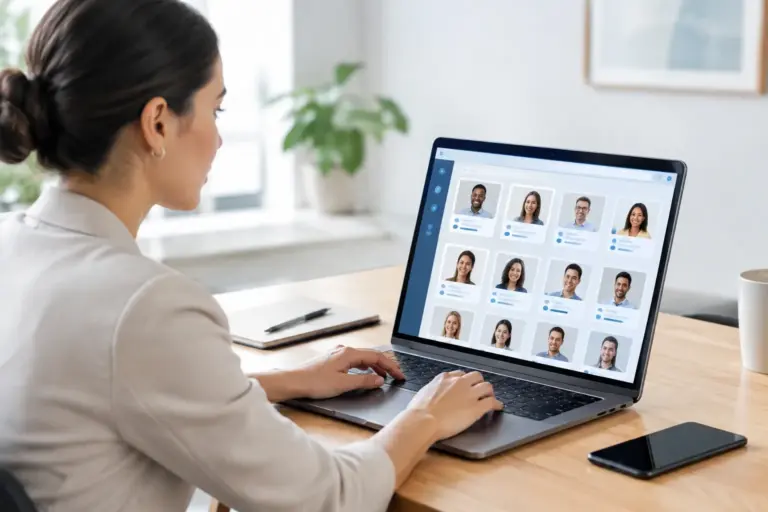
Video interviewing changes the economics of the early and middle stages. Candidates can record responses on their own schedule, while recruiters and hiring teams review them when they are ready. A single structured interview can be assessed by multiple stakeholders without requiring a panel to find the same 30-minute slot. That is not merely faster. It makes the process repeatable.
The distinction becomes clearer when teams separate synchronous video interviews from one-way, asynchronous video interviews. A live video call is still a live interview with lower travel friction. One-way video interviewing is a different workflow: standardized prompts, recorded responses, flexible review, and a durable assessment record.
Speed Is Valuable Only When Decisions Improve
Teams often adopt video interviews because they want to move faster. That is a valid objective, but speed alone can produce poor outcomes if it means screening people with weak criteria or pushing candidates through an impersonal process.
Used well, asynchronous video interviewing removes delay from the point where recruiting teams need it most: initial qualification. Rather than scheduling first calls across time zones, recruiters can invite qualified applicants to answer role-specific questions. Hiring managers can review the strongest responses alongside the candidate profile, resume, assessment results, and scorecard.
Live interviews should then be reserved for decisions that benefit from dialogue. A recruiter screen may verify motivation and logistics. A recorded video interview may test communication, relevant experience, and judgment using consistent questions. A final live conversation can probe trade-offs, team dynamics, and the candidate’s questions about the role.
This sequencing protects interviewer time. More importantly, it gives candidates a process that has purpose. Asking someone to complete a recorded interview after three vague rounds is friction. Asking them to complete a focused, time-bound assessment that replaces a scheduling-heavy first conversation can be a fair trade.
Consistency Is the Strongest Case for Video
Unstructured interviewing is one of recruitment’s most persistent operational failures. Two managers can meet equally capable candidates and walk away with entirely different impressions because they asked different questions, emphasized different experiences, or relied on instinct instead of defined criteria.
Recorded video interviews make standardization easier to enforce. Every candidate for the same role can receive the same prompts, the same response window, and the same scoring framework. That gives teams a more comparable body of evidence before they decide who moves forward.
Standardization does not mean making every conversation identical from first touch to offer. It means making the evaluation criteria consistent where consistency matters. For example, a customer success hire might be evaluated on communication clarity, problem diagnosis, stakeholder management, and commercial judgment. Interviewers can still explore a candidate’s unique background in a live round, but the core decision signals should not depend on who happened to ask the questions.
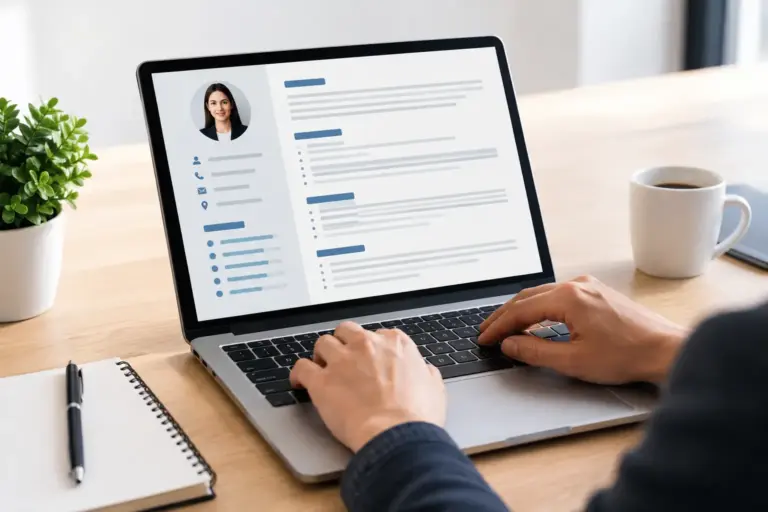
This is also where fragmented hiring stacks create risk. If video responses sit in one application, interviewer notes live in email, scorecards are in a spreadsheet, and approvals occur in chat, recruiting leaders cannot see how a decision was made. The process becomes difficult to audit, improve, or scale.
Candidate Experience Depends on Design, Not Format
Some employers assume live interviews are automatically more human. Some assume candidates always prefer the flexibility of recorded video. Neither assumption holds universally.
A thoughtful live interview can feel personal and decisive. A poorly run one can feel like a repetitive calendar obstacle. A clear video interview invitation can respect a candidate’s time by explaining why it is being used, how long it will take, what will be assessed, and when they can expect an update. A vague request to “record yourself” can feel one-sided and dismissive.
Candidate experience improves when employers set expectations and eliminate unnecessary rounds. Give candidates reasonable deadlines, practical instructions, and an accessible path for accommodation requests. Avoid surprise video tasks after an application unless the role and stage justify them. And do not ask candidates to repeat information they have already provided.
There is a role-specific dimension, too. Candidates for frontline, hourly, or high-volume positions may value the ability to interview outside traditional working hours. Executive candidates may expect direct contact and meaningful live engagement earlier in the process. The right design reflects the role, labor market, and level of the hire.
Where Live Interviews Still Lead
Video interviewing is not a replacement for every human conversation. Live interviews remain the better choice when the purpose is interactive discovery rather than standardized evaluation.
They are especially useful for final-stage discussions, leadership hiring, highly collaborative roles, and positions where a candidate must respond to evolving scenarios. They also matter when candidates are evaluating the organization as much as the organization is evaluating them. A strong manager conversation can answer concerns, establish credibility, and make the opportunity real in a way a recorded prompt cannot.
The mistake is using this truth to justify live interviews for every step. A live interview should earn its place in the process. If an interviewer cannot explain the decision signal they need, the questions they will ask, and what will happen with the feedback, the meeting is probably not necessary.
Build a Hybrid Interview Workflow That Scales
The most effective model is usually hybrid: video-first for structured screening, live interaction for deeper validation and mutual assessment. The exact sequence will vary, but the operating principles should remain fixed.
First, define the scorecard before opening interviews. Teams should agree on the capabilities that predict success, the evidence that demonstrates each capability, and the decision threshold for advancing a candidate. This prevents a familiar candidate from winning simply because they interviewed well with one stakeholder.
Second, use asynchronous video for questions that need comparable answers. Keep prompts short, job-relevant, and limited to what the team will genuinely review. One to three focused questions will often generate better evidence than a long assignment disguised as screening.
Third, use live interviews to investigate what the recording cannot settle. Give each interviewer a distinct focus, such as technical depth, leadership approach, or cross-functional judgment. Repeating the same generic questions wastes the candidate’s time and weakens the panel’s signal.
Finally, centralize the evidence. Video responses, interview feedback, candidate communications, approvals, and offer workflows should sit in the same recruitment environment. Dr.Job brings these steps into one AI-native operating system, so teams can move from screening to structured evaluation and offer execution without switching between disconnected tools.
Measure the Process, Not Just the Hire
The right format should be judged by outcomes, not preference. Track time from application to first evaluation, interview completion rates, reviewer turnaround time, stage-to-stage conversion, offer acceptance, and quality-of-hire indicators. Segment the results by role family, location, and source of hire.
If recorded video interviews increase completion but reduce qualified advancement, the prompts may be poorly designed or introduced too early. If live panels create strong decisions but add two weeks to the process, the issue may be interviewer availability or an overloaded approval path. Data exposes where the workflow is helping and where it is creating drag.
Hiring needs more than a collection of interview formats. It needs a decision system that applies the right level of human interaction at the right moment, preserves evidence, and keeps the process moving. Build that system well, and candidates will feel the difference before they ever receive an offer.