
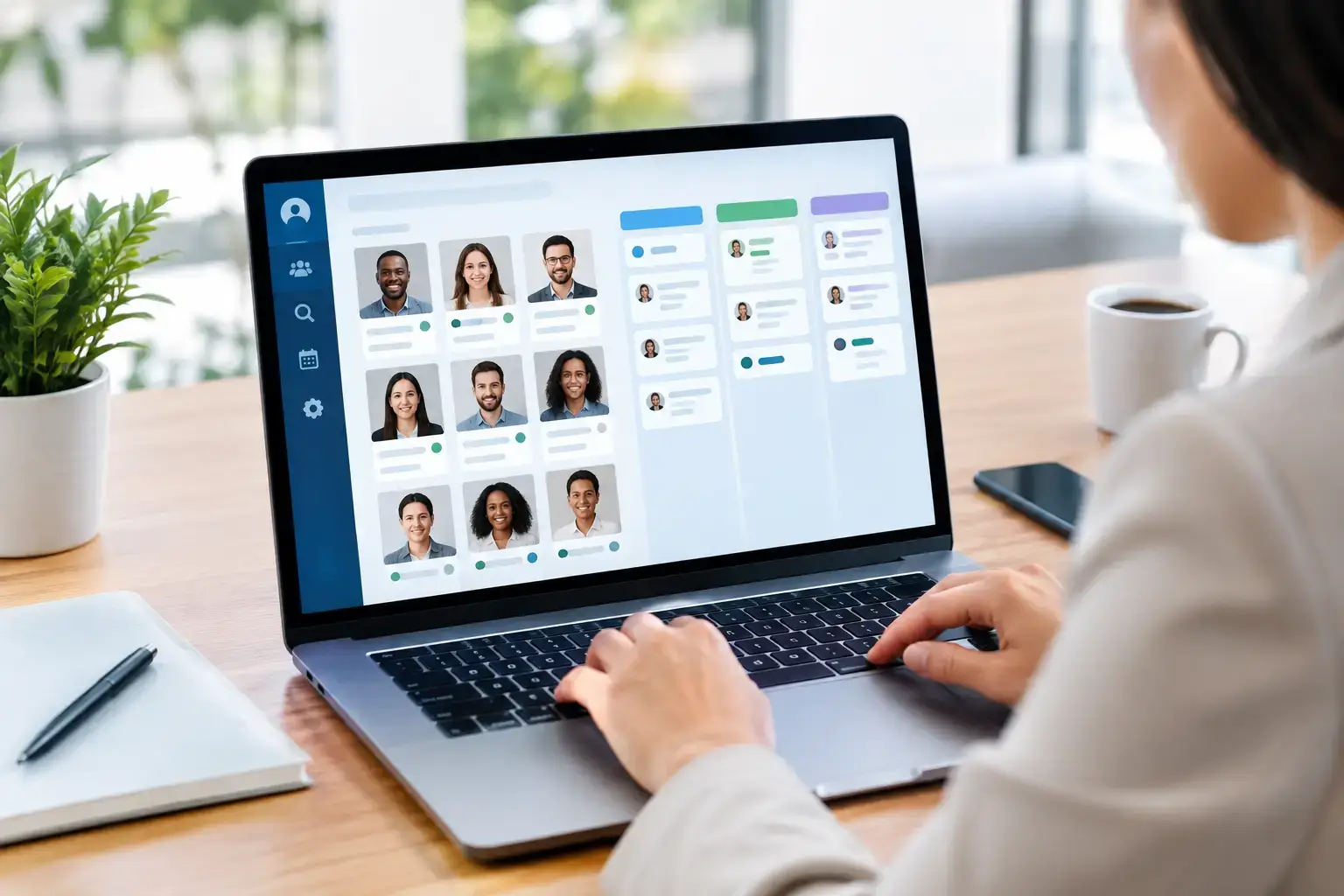

A recruiter opens a job board, copies candidates into an ATS, checks a spreadsheet for interview feedback, chases approvals in email, then switches to a separate tool to send an offer. That is not a hiring process built for scale. This guide to recruitment operating systems explains how employers can replace that fragmented sequence with infrastructure that runs hiring from requisition to signed offer.
Hiring teams do not usually have a talent problem first. They have an operating problem. Good candidates move quickly, hiring managers need visibility, and recruiters need decisions without manual handoffs. When the process is spread across disconnected tools, every stage creates delay, duplicate data, and room for inconsistency.
A recruitment operating system changes the model. It does not simply add another application to the stack. It becomes the environment where recruitment work happens, data stays current, and automation moves approved work forward.
What Is a Recruitment Operating System?
A recruitment operating system is the central infrastructure for planning, executing, and measuring the hiring lifecycle. It connects job creation, distribution, candidate sourcing, screening, pipeline management, interviews, evaluation, offers, approvals, compliance, and reporting in one operating environment.
The distinction matters. An applicant tracking system records applicants and requisition activity. A job board delivers reach. A video platform hosts interviews. An e-signature tool finalizes documents. Each can serve a useful function. But none, by itself, coordinates the full operation.
A recruitment operating system is designed to coordinate it. It gives every participant – recruiters, hiring managers, interviewers, finance teams, and HR leaders – one source of truth and a defined workflow. Instead of asking people to remember the next step, the system manages the next step.
This is especially valuable when hiring volume rises. A lightweight process can survive when a company fills a few roles a quarter. It breaks down when multiple teams hire across locations, functions, and approval paths. At that point, more tools do not create capacity. They create more handoffs.
Why Fragmented Hiring Stacks Fail
Tool sprawl rarely starts as a deliberate strategy. Teams add products to solve immediate gaps: a scheduler for calendar friction, a spreadsheet for reporting, a messaging tool for candidate follow-up, a separate assessment platform for screening. Over time, the stack becomes a patchwork of partial records and manual workarounds.
The cost is not only software spend. Recruiters spend time reconciling statuses. Hiring managers receive incomplete context. Candidates repeat information. Leaders question which report is accurate. Most damaging of all, decisions slow down while high-quality candidates accept competing offers.
Fragmentation also weakens accountability. If a candidate stalls, is the issue sourcing, screening, interviewer availability, approval routing, or an outdated pipeline stage? When the workflow lives across five systems and dozens of messages, no one can see the complete answer quickly.
A unified system makes bottlenecks visible. It shows where candidates are waiting, where interview feedback is late, which sources produce qualified talent, and where offers lose momentum. That visibility turns recruiting from a reactive service function into a managed operation.
The Core Layers of a Recruitment Operating System
A system should cover the lifecycle without forcing teams to export data or recreate context at each stage. The exact configuration depends on company size, hiring model, and compliance requirements, but the operating foundation is consistent.
Requisition and job distribution
Hiring begins before a job is posted. Teams need a controlled way to create requisitions, define role requirements, route approvals, and produce consistent job content. Once approved, distribution should happen from the same environment that will later track applicant activity.
This prevents a common failure point: a role goes live before compensation bands, approval status, interview plans, or ownership are clear. A system-led workflow creates discipline at the start rather than cleanup later.
Candidate acquisition and screening
Sourcing should not be separated from the pipeline where candidates are assessed. Whether talent arrives through job postings, direct outreach, referrals, or an existing database, recruiters need one candidate record with a complete history.
AI can add meaningful speed here when it is attached to defined hiring criteria. It can prioritize candidates based on role fit, surface relevant experience, identify duplicate records, and support high-volume screening. The trade-off is clear: AI should accelerate structured judgment, not hide how decisions are made. Teams still need transparent criteria, human review for high-impact decisions, and regular checks for bias or poor data quality.
Pipeline orchestration and communication
The pipeline is where recruiting operations either gain momentum or lose it. A recruitment operating system should automatically move candidates through approved stages, trigger communications, assign tasks, and alert stakeholders when service-level expectations are missed.
That does not mean every candidate receives a generic automated experience. Automation should handle repeatable work such as acknowledgments, reminders, scheduling prompts, and status updates. Recruiters should spend their time on candidate conversations, market intelligence, and decision support.
Interviews and consistent evaluation
Interviewing is often the most expensive stage because it consumes time from recruiters, managers, and subject-matter experts. Native video interviewing, structured scorecards, and centralized feedback reduce administrative drag while creating a clearer decision record.
Consistency is the real advantage. When every interviewer evaluates candidates against the same role-specific criteria, teams can compare evidence instead of relying on memory, personality, or the loudest voice in the debrief. For high-volume roles, asynchronous video can speed early screening. For senior or highly specialized roles, live conversations and deeper calibration may remain the better choice. The system should support both without splitting the record.
Offers, approvals, and compliance
A candidate experience can unravel at the finish line when offers move through email attachments, manual approvals, and disconnected e-signature tools. Offer generation, compensation approval, document workflows, and e-signature should be part of the same process that managed the candidate from the beginning.
This gives leaders control without forcing recruiters to chase approvers. It also creates a defensible record of who approved what, when terms changed, and whether required documentation was completed. Compliance needs vary by geography and industry, so the right system must accommodate local requirements rather than impose one rigid workflow on every team.
How to Evaluate a Recruitment Operating System
Do not begin with a feature checklist. Start with the operating failures that cost your organization time, money, or candidate trust. If candidates disappear after screening, examine response times and handoffs. If hiring managers complain about quality, examine intake discipline, assessment criteria, and feedback completion. If leaders lack confidence in reporting, examine where data is created and changed.
Then test whether a platform can run the workflow, not merely document it. Ask whether a job approval can trigger posting, whether screening results update the pipeline automatically, whether interview feedback is structured and visible, and whether an accepted offer becomes a complete auditable record without rekeying data.
Also assess adoption. The most advanced workflow has little value if hiring managers bypass it. Interfaces should make the right action easy: approve a requisition, review a shortlist, submit interview feedback, or sign an offer. Adoption is an operational design requirement, not an afterthought for implementation.
Finally, look at integration with the systems that must remain outside recruitment, such as HRIS, identity management, payroll, or business intelligence. Consolidation does not mean isolating hiring data. It means eliminating unnecessary recruiting tools while maintaining clean, governed data flows across the business.
What Implementation Should Change
Implementing a recruitment operating system is not a data migration project with a new interface. It is an opportunity to redesign the way hiring decisions move. The strongest teams standardize what should be standard – requisition requirements, interview plans, scorecards, approval routes, and candidate communications – while preserving flexibility for different job families and markets.
Set measurable operating targets from the start. Track time from requisition approval to posting, candidate response time, stage conversion, interviewer feedback completion, offer approval speed, acceptance rate, and source quality. Avoid measuring volume alone. A large applicant pool is not progress if qualified candidates wait days for a response.
Dr.Job is built around this system-level model: one AI-native environment that brings sourcing, screening, pipelines, video interviews, offers, e-signature, and compliance workflows into a single recruitment operation.
The goal is not to automate every human interaction. The goal is to remove the administrative friction that prevents people from making better, faster hiring decisions. When the system handles coordination, your team can focus on the work no spreadsheet, inbox, or disconnected tool can do: recognize the right person and move with confidence.