
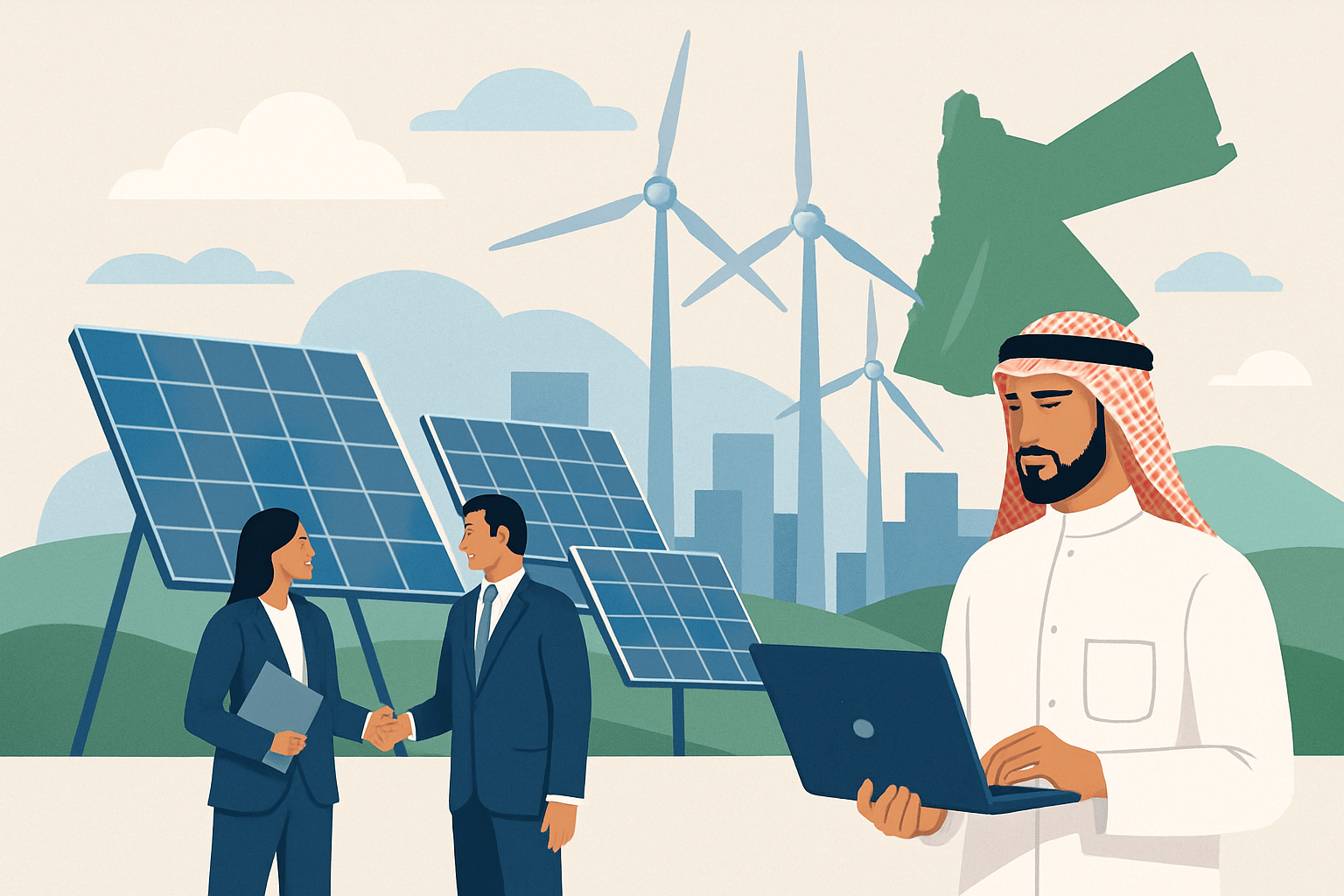

Renewable Energy Jobs Created by Vision 2030 in Jordan 2026
The renewable energy sector is growing 3x faster than traditional energy, with 14.1 million jobs globally by 2030. This report covers job opportunities in solar, wind, and energy storage, which countries are hiring most, salary expectations, and how to transition into renewable energy careers.
The Strategic Push Behind Jordan’s Green Transition
Jordan’s commitment to renewable energy represents more than an environmental initiative. It serves as a core economic strategy designed to reduce import dependency, stabilize electricity tariffs, and generate sustainable employment for a rapidly growing youth demographic. By 2026, government agencies have streamlined permitting workflows, expanded public private partnership frameworks, and aligned national training curricula with international engineering standards. This structural transformation has permanently altered the local labor market, requiring specialized expertise in photovoltaic deployment, turbine lifecycle management, and smart grid infrastructure. Companies operating within this sector now prioritize candidates who demonstrate both technical proficiency and regulatory compliance knowledge. The consistent policy backing ensures long term project stability, which translates directly into secure employment pathways for qualified professionals who align with national development priorities.
Key Sectors Generating Renewable Energy Employment
The expansion of green infrastructure has produced distinct employment categories that cater to varying experience levels and educational backgrounds. Each segment requires targeted skill sets, making strategic preparation essential for career advancement.
Solar Power Installation and Maintenance
Related: HR Manager Jobs in Jordan 2026 — Compensation 
Solar initiatives continue to dominate regional capacity additions, driving demand for field technicians, quality assurance inspectors, and system design engineers. Projects spanning residential rooftops to utility scale farms require professionals who understand inverter calibration, panel mounting protocols, and performance monitoring software. Employers in 2026 emphasize hands on experience with international safety standards alongside familiarity with region specific climate conditions. Certifications from recognized training institutes significantly improve candidate visibility during recruitment cycles. Daily responsibilities frequently include troubleshooting thermal imaging anomalies, conducting seasonal cleaning schedules, and upgrading legacy string configurations to meet modern efficiency benchmarks.
Wind Farm Operations and Engineering
While Jordan relies more heavily on solar resources, strategic wind corridors near the northern highlands and coastal plains are generating specialized engineering vacancies. Wind operations roles focus on predictive maintenance, blade inspection protocols, and remote monitoring analytics. Professionals with mechanical engineering backgrounds frequently transition into these positions after completing manufacturer approved turbine training programs. The sector also requires data analysts who interpret meteorological patterns to optimize energy output and schedule routine servicing visits. Safety coordinators play a critical role in managing elevated work environments and ensuring compliance with occupational health regulations specific to offshore and high altitude installations.
Grid Modernization and Energy Storage
Integrating intermittent renewable sources into the national transmission network has created a growing demand for electrical engineers, battery storage specialists, and grid management analysts. Utilities require experts who can manage load balancing, implement smart metering systems, and maintain fault protection mechanisms. This segment offers some of the highest starting salaries within the green economy, particularly for candidates with certification in power electronics and distribution automation. Continuous innovation in storage technology means companies regularly recruit professionals who stay current with emerging efficiency benchmarks and cybersecurity protocols for critical infrastructure.
Geographic Hotspots for Green Career Growth
Related: Jordan Jobs for Expats 2026 — Complete Guide to Wo
Amman functions as the central hub for corporate headquarters, engineering consultancies, and regulatory oversight bodies managing renewable portfolios. Most senior project managers, procurement specialists, and policy advisors base their operations within the capital, benefiting from proximity to ministry offices and international development partners. Regional installations span multiple governorates, creating rotational field assignments that provide valuable operational exposure. Professionals willing to relocate temporarily to project sites often accelerate promotion timelines while building comprehensive industry networks. Transportation allowances and site housing packages remain standard benefits for roles positioned outside urban centers. Candidates should anticipate hybrid work models that combine monthly office meetings with quarterly site inspections across diverse topographical zones.
Skills and Qualifications Employers Demand in 2026
Recruitment teams evaluating candidates for renewable positions prioritize verifiable credentials over generic engineering degrees. Employers consistently request documented training in PV system sizing, electrical code compliance, and occupational health and safety regulations. Advanced proficiency in simulation software such as PVsyst or HOMER enhances resume competitiveness, particularly for design oriented roles. Technical writing ability proves equally important, as project documentation and permit applications require precise reporting standards aligned with Jordanian engineering council requirements. Networking through industry conferences and maintaining an updated digital portfolio further distinguishes applicants during highly competitive selection phases. Fluency in Arabic and English remains a practical advantage for cross functional communication between international contractors and local authorities.
Actionable Steps to Secure Renewable Energy Roles
Securing a position within Jordan’s expanding clean energy market requires a structured approach that aligns education, networking, and application strategy. Begin by auditing your current qualifications against employer posted requirements and identifying specific certification gaps that need immediate resolution. Attend sector focused workshops hosted by professional syndicates and participate in technical demonstration events organized by leading developers. When you identify openings matching your expertise, use our platform to search jobs on DrJobPro, where verified employers publish detailed role descriptions and compensation ranges. Uploading comprehensive documentation, including safety training records and software proficiency certificates, significantly increases interview conversion rates. Establishing a complete professional presence allows recruiters to contact you directly when new projects receive funding approvals. Consider visiting our page to explore existing jobs in Jordan before submitting formal applications. Once your credentials are verified, proceed to create your free profile to unlock priority visibility among hiring managers actively expanding their green teams.
Navigating Salary Ranges and Career Progression
Compensation structures in the renewable sector reflect the technical complexity and project scale associated with each role. Entry level technicians typically begin with foundational packages that increase substantially once independent certification clearance is achieved. Mid level engineers managing installation crews or overseeing grid integration studies command premium salaries commensurate with responsibility margins. Senior positions involving budget allocation, vendor negotiation, and regulatory liaison work often include performance bonuses tied to project commissioning milestones. Companies regularly offer continuous learning stipends, allowing professionals to pursue advanced modules in energy management and sustainability auditing. Long term career trajectories frequently lead to regional leadership roles, independent consulting practices, or executive positions within multinational clean energy firms operating across the Levant.
Frequently Asked Questions
What types of renewable energy jobs are currently available in Jordan?
Employers are actively hiring solar technicians, wind operations specialists, grid modernization engineers, and project coordinators across multiple governorates. These positions span design, installation, maintenance, and regulatory compliance functions within the expanding clean infrastructure sector.
How long does the hiring process typically take for renewable energy roles in 2026?
Most companies complete initial screening and technical assessments within three to four weeks after application submission. Final selections usually conclude within six weeks once reference verification and security clearances are processed.
Are foreign professionals eligible to apply for renewable energy positions in Jordan?
International candidates holding recognized engineering credentials and valid work authorization may apply for mid to senior level vacancies. Employers prefer applicants who demonstrate bilingual communication skills and prior experience navigating Middle Eastern regulatory frameworks.
Frequently Asked Questions
Q1: How many renewable energy jobs will exist by 2030?
A: Projected 14.1 million globally by 2030 (IEA). Currently 12.7 million. Growth is 3x faster than traditional energy jobs. Major hires needed in solar, wind, energy storage, and grid modernization.
Q2: What types of renewable energy jobs exist?
A: Installation (highest demand), operations & maintenance, engineering, grid management, energy storage specialists, environmental consultants, sales, project management, and supply chain roles.
Q3: What education do I need for renewable energy jobs?
A: Trades (no degree needed): electrician, welder, heavy equipment. Technical: associate degree in renewable tech. Professional: BS in engineering or environmental science. Certifications accelerate hiring.
Q4: What are typical renewable energy salaries?
A: Installation/technician: $50K-80K. Engineers: $80K-130K. Project managers: $100K-150K. Senior roles: $130K-200K. Salaries vary by country and skill level.
Q5: Which countries are hiring most for renewable energy?
A: China (40% of growth), India, USA, Germany, Spain, and Australia. All major economies are investing heavily in renewable energy infrastructure and hiring aggressively.
Related Resources














