
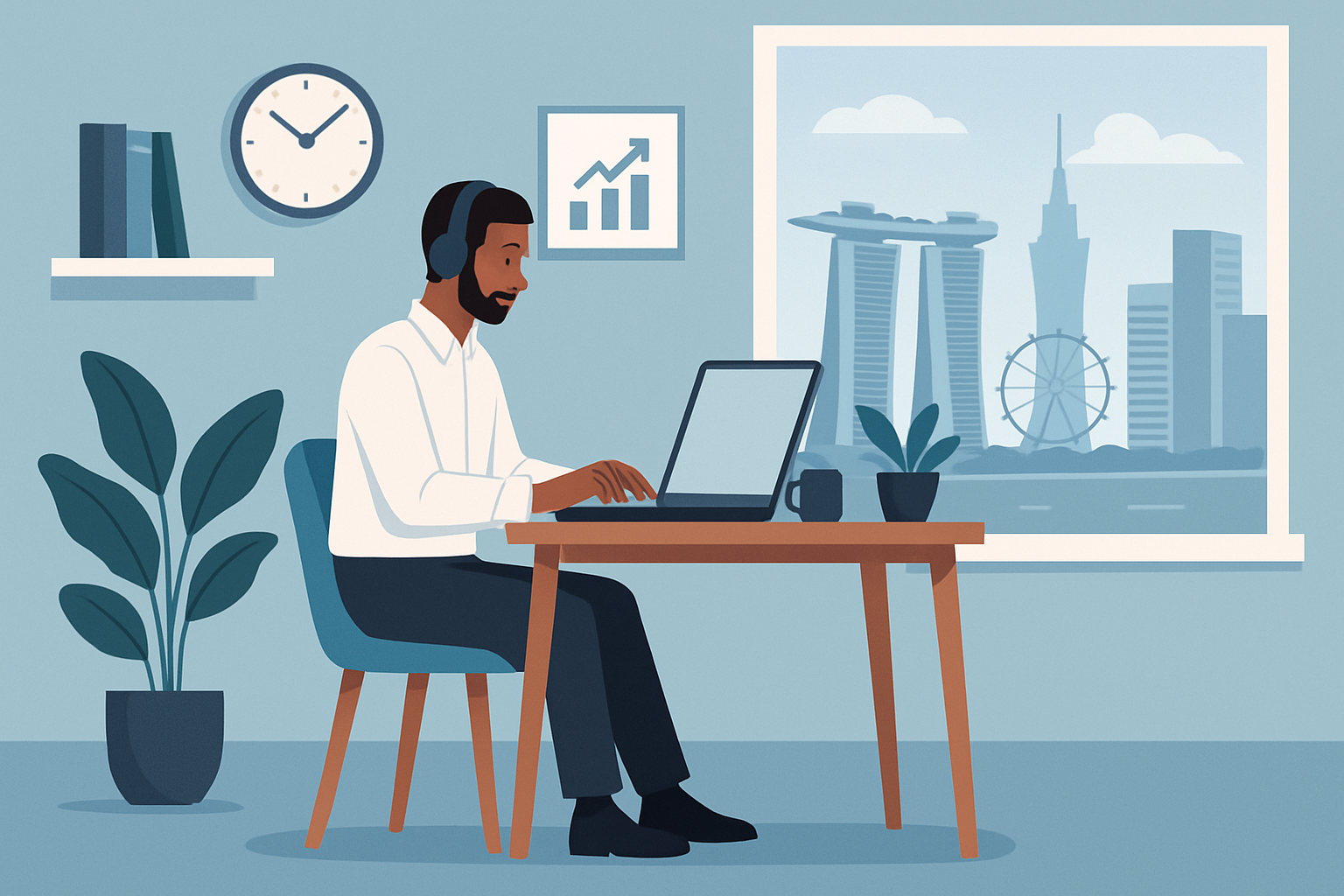

How to Stay Productive While Working Remotely in Singapore
How to Stay Productive While Working Remotely in Singapore
To stay productive while working remotely in Singapore, establish a dedicated workspace, synchronize your daily schedule with core business hours, and leverage the city’s reliable fiber optic infrastructure and abundant green spaces. Professionals who implement structured routines, utilize task management platforms, and strictly separate work from leisure consistently achieve higher output and sustained well being throughout 2026.
Setting Up Your Home Office in a Tropical Climate
Singapore operates as a tropical hub with consistent temperatures and high humidity year round. These environmental conditions require intentional office setup strategies to maintain cognitive clarity and physical comfort. Remote workers who treat their home environment as a functional extension of a corporate office significantly reduce distractions and improve long term focus.
Optimizing Workspace Layout for Small Urban Apartments
The majority of professionals in Singapore reside in HDB flats, condominiums, or landed properties where square footage is highly optimized. Successful remote workers maximize limited space by implementing vertical storage solutions, investing in compact ergonomic furniture, and positioning their monitors away from direct sunlight. Natural light improves mood and reduces eye strain, but glare on screens destroys concentration. Use blackout curtains for video calls and desk lamps with adjustable color temperatures to simulate daylight during late afternoon work sessions. Cable management systems prevent clutter, which directly correlates with mental clarity. When you remove visual noise from your immediate perimeter, your brain allocates more resources to complex tasks rather than filtering distractions.
Managing Humidity and Heat Without Sacrificing Focus
High moisture levels can cause discomfort, lethargy, and equipment malfunction if left unaddressed. Maintain indoor humidity between forty five and fifty five percent using dehumidifiers or air conditioning units set to eco mode. Proper airflow prevents stagnation and keeps oxygen levels optimal for brain function. Place indoor plants that thrive in tropical conditions, such as snake plants or pothos, to naturally regulate air quality and introduce calming greenery. Avoid positioning your workstation near heat sources or direct sun exposure, as thermal discomfort triggers micro fatigue over repeated hours. Schedule short hydration breaks every two hours, and keep a reusable bottle within arm reach to maintain steady energy levels without interrupting workflow cycles.
Mastering Time Zones and Communication Norms
Singapore occupies a strategic geographical position at GMT plus eight, making it an ideal bridge between European, Asian, and Australian markets. Remote teams increasingly operate across multiple regions, which demands deliberate scheduling and refined communication protocols. Establishing clear boundaries around availability prevents burnout while maximizing collaboration windows.
Aligning Your Schedule with Regional and Global Teams
Identify the one to three hour window where your core audience or leadership team operates online, and protect that period for synchronous work. Block your calendar accordingly, marking deep work phases outside those overlapping hours. Communicate your availability status through team channels before the day begins, and update it promptly when stepping away for lunch or appointments. Utilize shared digital calendars that automatically adjust to viewer time zones, reducing scheduling errors and last minute conflicts. Consistency builds trust. When colleagues know exactly when you respond, emails and messages decrease, leaving more room for focused execution.
Leveraging Asynchronous Tools Over Endless Meetings
Video conferencing fatigue remains a primary productivity drain across global organizations. Shift routine updates, feedback requests, and project documentation to asynchronous platforms like Notion, Slack threads, or Loom. Record short video walkthroughs instead of scheduling lengthy calls, allowing teammates in different locations to review content at their own pace. Establish response time expectations upfront, such as acknowledging messages within four hours rather than demanding immediate replies. This approach respects individual peak performance windows and preserves cognitive bandwidth for complex problem solving. Document decisions in centralized knowledge bases so new hires and distributed members can reference them without disruption.
Maintaining Work Life Balance in a Fast Paced City
Singapore maintains a reputation for efficiency and relentless momentum, but remote work blurs traditional boundaries between professional duties and personal recovery. Implementing deliberate separation techniques protects mental health and sustains long term career viability.
Using Local Parks and Green Spaces for Mental Reset
The national urban planning initiative emphasizes accessible nature integration, offering thousands of hectares of parks, gardens, and park connectors. Step outside during your midday break and walk ten minutes to nearby recreational areas like Bishan Ang Mo Kio Park, Henderson Waves, or neighborhood pocket gardens. Fresh air and natural light reset circadian rhythms, lower cortisol levels, and improve subsequent task performance. Leave your phone behind or switch it to airplane mode during outdoor walks to truly disconnect from digital notifications. Physical movement combined with environmental change restores attention span faster than scrolling through social media.
Navigating Food Delivery and Meal Prep Efficiency
Reliable food delivery services provide convenience, but relying solely on processed meals leads to afternoon energy crashes. Prepare balanced lunches during weekend batches, incorporating lean proteins, complex carbohydrates, and leafy vegetables to sustain stable blood sugar levels. Schedule your midday break like a fixed meeting, stepping away from your desk entirely to eat and stretch. Use microwave safe containers that align with refrigerator storage limits, and rotate recipes weekly to prevent culinary fatigue. Proper nutrition fuels sustained concentration, while rushed snacking increases decision fatigue during critical afternoon deliverables.
Career Growth and Finding the Right Remote Role
Productivity thrives when aligned with meaningful work and organizational support. The remote employment landscape in Singapore continues expanding across technology, finance, creative industries, and professional services. Securing roles that match your expertise ensures engagement, which directly amplifies daily output.
Tailoring Your Search for Competitive Opportunities
Search strategically by focusing on companies that explicitly endorse distributed work models and offer clear performance metrics. Review job descriptions for emphasis on autonomy, output based evaluation, and flexible coordination structures. Narrow your filters to industries experiencing growth, including sustainable infrastructure, digital healthcare, and cross border e commerce. Browse curated listings by visiting jobs in Singapore to filter opportunities that align with your skill set and preferred working arrangements. Companies that prioritize results over screen time attract higher performing talent, creating a positive cycle of trust and efficiency.
Building a Strong Digital Presence
Remote professionals compete globally, requiring visible credentials that demonstrate capability without physical supervision. Maintain an updated portfolio showcasing measurable outcomes, published case studies, or verified client testimonials. Contribute actively to industry forums, publish analytical articles on professional networks, and request performance references from past managers. Regularly audit your digital footprint to ensure alignment with employer expectations in 2026. You can explore broader distribution channels by browsing remote jobs, or take the next step by logging in to search jobs on DrJobPro for tailored recommendations. Start by taking just thirty minutes this week to create your free profile, updating your headline, uploading certifications, and configuring notification preferences for matching opportunities. Visibility accelerates placement, and placement fuels motivation.
Frequently Asked Questions
What are the legal requirements for working remotely from Singapore in 2026?
Foreign nationals must hold a valid Employment Pass, S Pass, or Dependment Pass that permits residential occupancy, while citizens and permanent residents face no restrictions. Employers remain responsible for ensuring workspace safety compliance and maintaining accurate employment records regardless of location. The Ministry of Manpower continues to enforce standard labor protections for all legally employed individuals residing within the country.
How does the average home internet speed support remote work in Singapore?
Fiber optic broadband providers consistently deliver download speeds ranging from five hundred megabits to one gigabit per second across most residential districts. Latency typically remains below fifteen milliseconds during peak business hours, enabling seamless video conferencing, cloud synchronization, and real time collaboration. Redundant backup connections via mobile data routers are recommended to prevent unexpected disruptions during critical project deadlines.
Is it tax advantageous to work remotely for an overseas company while living in Singapore?
Income sourced from foreign employers remains taxable if received into a Singapore bank account or physically remitted within the country. Tax residents earning over twenty thousand Singapore dollars annually must file returns with the Inland Revenue Authority, though treaty agreements may prevent double taxation in select jurisdictions. Consulting a certified local tax advisor ensures proper classification of income sources and maximizes eligible deductions for home office expenses.














