
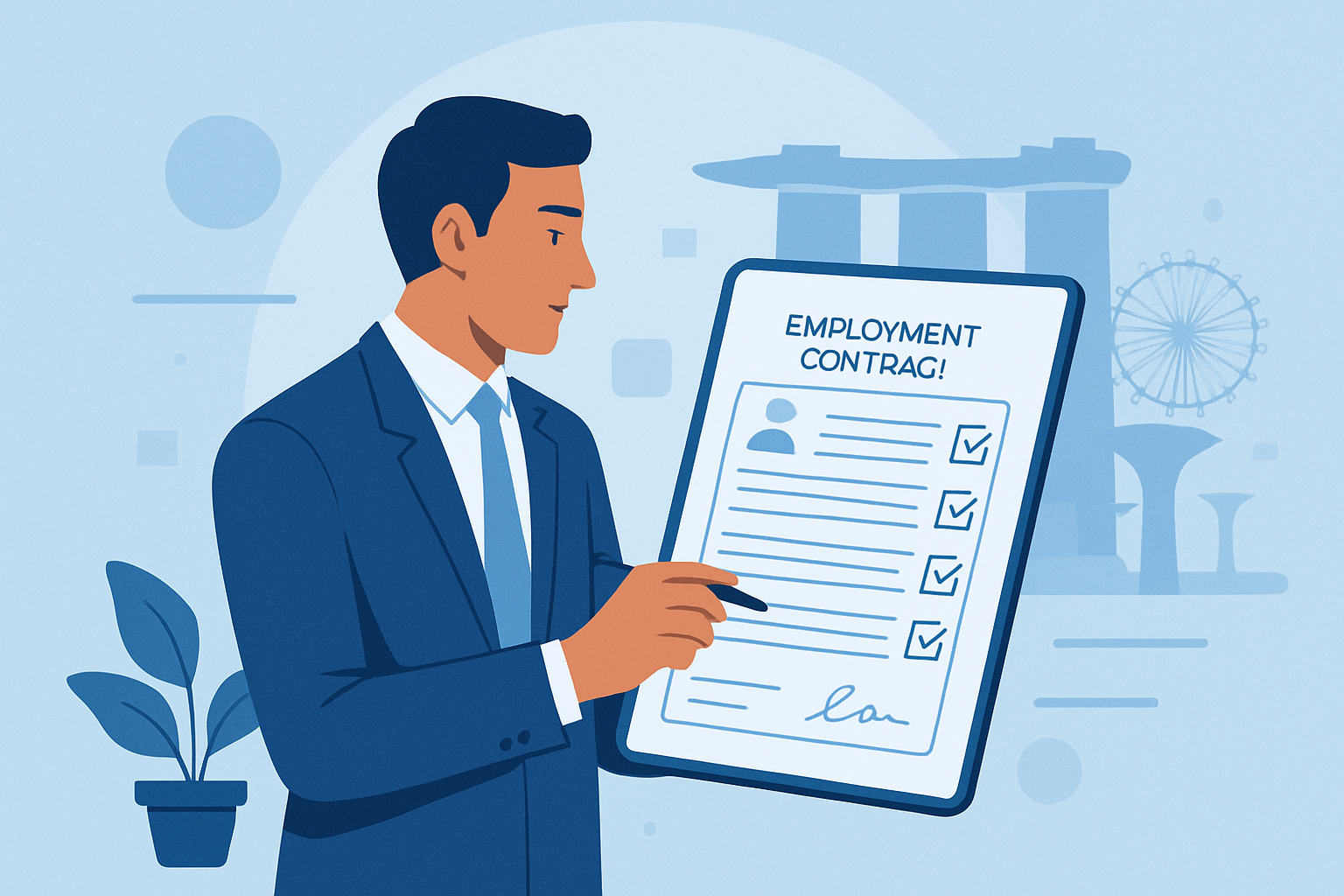

Employment Contract Template for Companies in Singapore
An employment contract template for companies in Singapore is a legally compliant document that outlines the terms of engagement between an employer and an employee, ensuring alignment with the Employment Act and local labour regulations. Using a standardized template protects both parties by clearly defining compensation, working hours, leave entitlements, termination conditions, and confidentiality obligations before work begins.
Understanding Singapore’s Legal Framework for Employment Contracts
Singapore maintains a structured and business-friendly regulatory environment governed primarily by the Ministry of Manpower. Companies must ensure their contracts comply with statutory requirements while remaining flexible enough to accommodate industry-specific needs. Labour guidelines evolve annually, so employers should verify compliance standards throughout 2026 before distributing agreements to new hires. A well-structured template reduces administrative friction during onboarding and minimizes the risk of future disputes.
Core Components Required by Law
Every employment agreement must include specific identifiers and operational details to be considered valid. These elements form the foundation of any legally sound template and prevent misunderstandings during payroll processing, performance reviews, or exit procedures. Employers should structure their documents to reflect transparency from day one, avoiding vague phrasing that could be interpreted inconsistently. Clear communication establishes trust and sets realistic expectations for both management and staff.
Mandatory Clauses Under the Employment Act
Related: تأشيرة العمل في ماليزيا 2026 | دليل Employment Pas
The Employment Act dictates several non-negotiable provisions for covered employees. Companies must explicitly state basic salary, overtime rates, medical leave allowances, annual leave accrual, and public holiday entitlements. Failure to include these mandated clauses can result in penalties during ministry audits or trigger employee claims for unpaid benefits. Aligning your template with current regulations ensures smooth onboarding and reduces administrative friction. Regular legal reviews guarantee that your documentation reflects the latest statutory updates and judicial precedents.
Key Sections of a Standard Employment Contract Template
A well-designed template balances legal compliance with operational clarity. Each section should address a specific aspect of the working relationship while maintaining consistent formatting. Below are the critical components that every Singapore-based company must incorporate to maintain regulatory adherence and operational efficiency.
Job Title and Duties
Clearly define the official role, reporting structure, and primary responsibilities. Vague descriptions often lead to scope creep or performance disagreements that hinder team productivity. Include expectations around deliverables, cross-department collaboration, and compliance with company policies. This section also serves as a reference point during promotions or role transitions. Updating duty statements annually keeps performance evaluations accurate and aligned with business objectives.
Compensation and Benefits
Related: تأشيرة العمل في سنغافورة 2026: Employment Pass وS
Detail the gross monthly salary, payment schedule, and allowance structures. Specify whether bonuses are discretionary or guaranteed based on company performance metrics. Outline additional perks such as health insurance, wellness subsidies, training budgets, and transport reimbursements. Transparent compensation frameworks reduce turnover and attract top talent competing for limited roles in the market. Always clarify tax deductions, CPF contributions, and payroll cycles to prevent financial confusion during monthly disbursements.
Working Hours and Leave Entitlements
Singapore mandates standard working hours of forty hours per week for eligible employees. State core office hours, remote work flexibility if applicable, and procedures for shift rotations. Document annual leave days, hospitalisation leave, maternity or paternity benefits, and unpaid leave options. Clear scheduling protocols help managers plan workflows and maintain productivity targets. Recent policy enhancements allow employees to request flexible work arrangements formally, so your template should acknowledge this right and outline the approval process.
Termination and Notice Periods
Establish mutually agreed notice periods based on contract duration and seniority level. Outline grounds for summary dismissal, garden leave conditions, and handover requirements. Specify how outstanding salaries, unused leave, and company assets will be settled during separation. Well-drafted termination clauses protect organizational interests while respecting employee rights. Including a severance framework for redundancy situations demonstrates corporate responsibility and supports smoother workforce adjustments.
Customization Tips for Different Employment Types in Singapore
Not all workforce arrangements follow identical structures. Companies operating across multiple departments or engaging diverse talent pools must adapt their templates accordingly. Flexibility without compromising compliance is essential for sustainable hiring practices. Misclassifying employment types often results in legal exposure and financial penalties.
Permanent vs Fixed-Term Contracts
Permanent agreements offer indefinite tenure with full statutory benefits and career progression pathways. Fixed-term contracts specify start dates, end dates, and renewal conditions. Use fixed-term templates for project-based roles, seasonal demand peaks, or maternity cover positions. Ensure expiration notices are communicated well in advance to maintain workforce stability. Always include explicit clauses regarding potential conversion to permanent status if business needs change.
Part-Time and Freelance Agreements
Part-time workers receive pro-rated benefits based on actual hours worked rather than full-time equivalents. Independent contractors operate under service agreements rather than employment contracts since they retain control over their methods and tools. Classify roles correctly to avoid misclassification penalties under current labour enforcement policies. Proper categorization safeguards tax compliance and social security contributions. Include milestone-based deliverables and payment schedules to streamline freelance engagements.
Common Pitfalls to Avoid When Drafting Contracts
Employers frequently overlook subtle but costly errors during template preparation. Ambiguous language regarding bonus eligibility often triggers compensation disputes. Failing to update intellectual property clauses can expose companies to data leaks or unauthorised use of proprietary materials. Ignoring recent amendments to mental wellness leave or flexible work arrangement requests also creates compliance gaps. Regular legal reviews and HR training sessions eliminate these risks before contracts reach new hires. Maintaining a centralized document repository ensures version control and prevents outdated templates from circulating.
How to Implement Your Contract Template Efficiently
Streamlining contract distribution accelerates hiring cycles and improves candidate experience. Digital signing platforms enable secure execution within minutes instead of traditional postal delays. Maintain version control by storing approved templates in centralized databases accessible only to authorized personnel. Encourage candidates who discover opportunities through jobs in Singapore to review all documentation transparently before acceptance. Standardized onboarding checklists paired with automated reminders ensure zero missed deadlines. Professionals ready to join innovative teams should create your free profile to access verified employers and streamlined application workflows. Hiring managers can search jobs on DrJobPro to source qualified candidates who align with corporate values and contractual expectations. Consistent template usage builds employer branding credibility and reinforces trust across the talent pipeline.
| Clause Category | Recommended Frequency Review | Primary Compliance Driver | Risk of Non-Compliance |
|---|---|---|---|
| Basic Salary & Allowances | Annually | Employment Act Section 9 | Payroll disputes, wage claims |
| Working Hours & Leave | Biannually | MOM Guidelines & WFMA | Overtime violations, audit penalties |
| Termination & Notice | As needed | Common Law & Contract Principles | Wrongful dismissal litigation |
| Confidentiality & IP | Annual | Copyright Act & PDPA | Data breaches, IP theft |
Frequently Asked Questions
What mandatory information must appear in every employment contract in Singapore?
Every valid contract must explicitly state the employee name, job title, basic salary, working hours, leave entitlements, medical benefits, and termination notice periods. These elements satisfy Employment Act requirements and establish clear mutual obligations between both parties. Missing any statutory clause may invalidate portions of the agreement during labour inspections.
Can employers modify compensation or working conditions after signing?
Employers cannot unilaterally alter agreed terms without obtaining written consent from the employee first. Any adjustments to salary, duties, or schedules require formal amendment documents signed by both sides to remain legally enforceable. Forced changes without proper approval often result in workplace disputes or regulatory complaints.
How does Singapore handle confidential information in employment agreements?
Companies routinely include confidentiality and non-disclosure clauses to protect trade secrets, client data, and internal strategies throughout employment and post-departure periods. These provisions must clearly define what constitutes restricted information and outline reasonable timeframes for restriction. Overly broad restrictions may be deemed unenforceable by courts, so precise language remains essential.














