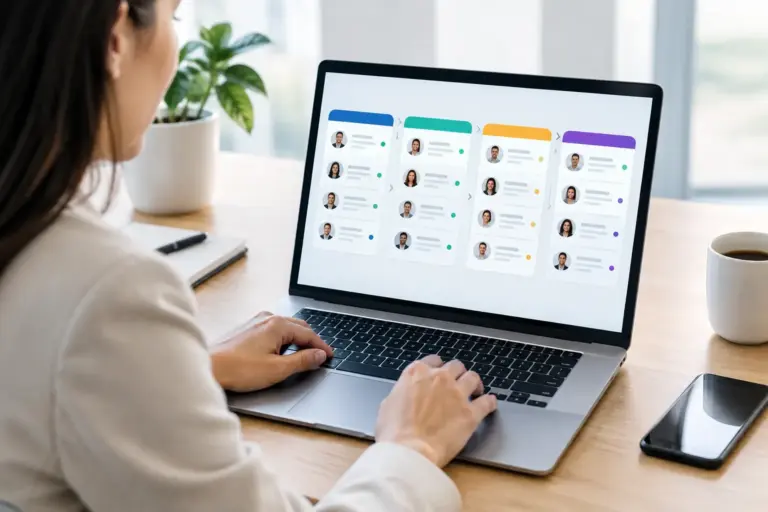

A job search can stall for weeks because the right opportunity never reaches the right person. You may spend hours scrolling listings, tailoring applications, and waiting for replies, while a recruiter may be focused on a narrow set of open roles. In the debate over AI job matching vs recruiters, the best answer is not that one replaces the other. It is knowing which tool can move your search forward at each stage.
AI can analyze your skills, experience, preferences, and job requirements at scale. Recruiters can add market context, personal advocacy, and access to hiring conversations that may not be visible in a job description. Used strategically, both can help you spend less time on low-fit applications and more time pursuing roles where you can compete.
AI Job Matching vs Recruiters: The Core Difference
AI job matching is built for speed and breadth. It evaluates information from your resume, profile, past roles, skills, location, salary expectations, and job preferences to identify opportunities that align with your background. Instead of manually reviewing hundreds of listings, you receive a more targeted starting point.
A recruiter works through relationships and human judgment. They may represent an employer, specialize in an industry, or manage a specific set of vacancies. Their role often includes screening candidates, explaining what a hiring manager values, coordinating interviews, and helping both sides assess fit.
The key difference is scale. AI can continuously compare your profile against a large volume of roles, including newly posted opportunities. A recruiter can provide deeper insight into a smaller number of openings. If your goal is to increase relevant job discovery quickly, AI has a clear advantage. If you are pursuing a specialized role or navigating a senior-level move, a strong recruiter can be highly valuable.
Where AI Job Matching Creates an Advantage
The biggest job-search problem for many candidates is not a lack of effort. It is applying without enough targeting. A role may look relevant by title but require different tools, industry experience, seniority, or location flexibility than you have. AI matching can look beyond the title and identify patterns between your background and the actual requirements.
That matters for career changers and early-career candidates especially. A former customer support specialist may match with customer success, account coordination, operations, or implementation roles based on transferable skills. A recent graduate may find entry-level opportunities that align with projects, coursework, certifications, and internships even when their resume does not follow a traditional path.
AI also reduces the manual work that drains momentum. Rather than repeating the same searches every day, you can use matching results to focus your effort on roles with a stronger initial fit. Platforms such as Dr.Job combine job discovery with tools that help candidates strengthen resumes, prepare for interviews, and manage applications in one workflow.
Faster discovery does not mean automatic fit
A match score is useful, but it is not a hiring decision. Job descriptions can be vague, outdated, or written around an ideal candidate who does not exist. AI may also prioritize keywords that do not fully reflect your impact, leadership ability, communication style, or growth potential.
Use matching technology as a filter, not a final verdict. Review the responsibilities, required qualifications, work arrangement, compensation details when available, and employer expectations before applying. The goal is not to apply to every suggested job. The goal is to identify promising opportunities faster and apply with intention.
Where Recruiters Still Deliver Value
Recruiters are most helpful when they bring access or insight you cannot easily find on your own. They may know why a role is open, which requirements are flexible, how quickly the employer plans to hire, and what the interview process looks like. That context can help you position your experience more effectively.
For specialized fields, recruiters can also understand nuances that automated matching may miss. In technology, healthcare, finance, engineering, sales, or executive hiring, a recruiter may recognize that two candidates with similar keywords have very different levels of responsibility. They can also explain whether an employer values domain expertise, client exposure, technical depth, or leadership experience most.
A recruiter can be particularly useful when you have a focused target. Maybe you want a contract role in a specific city, a remote position with occasional travel, or a manager-level role in a niche industry. In those situations, a recruiter can help translate a broad career goal into a credible candidate profile for a particular employer.
Recruiter support has limits too
Recruiters are not personal career agents for every applicant. Their priority is typically filling roles for employer clients. If your profile does not match their current openings, they may not be able to move your application forward, even if you are qualified for other positions.
Response times can also vary. A recruiter may be managing dozens of candidates, multiple hiring managers, and shifting job requirements. Relying on one recruiter or one staffing firm can leave your search too dependent on someone else’s pipeline.
That is why candidates should continue building their own job-search system. Keep applying to targeted roles, optimize your resume for the positions you want, track your applications, and prepare for interviews. Recruiter relationships are valuable, but they work best as one channel in a broader strategy.
Which Option Is Better for Your Search?
It depends on the type of job you want and where you are in your career. AI job matching is often the stronger first move when you need volume, speed, and a clearer view of available opportunities. It helps you surface roles across locations, industries, and work formats without turning job search into a full-time administrative task.
Recruiters tend to add the most value when your search is narrow or complex. That includes highly specialized positions, leadership roles, confidential searches, contract placements, and industries where personal networks influence hiring. They can also help when you are already a close match and need sharper positioning for a specific employer.
For most active job seekers, the practical answer is to use both. Let AI expand and prioritize your opportunity pipeline. Let recruiters provide market intelligence and a human connection where one is available. You do not have to choose between automated efficiency and personal guidance.
How to Use AI and Recruiters Together
Start with a resume that clearly communicates the work you want next, not only the work you have done before. Include relevant skills, measurable outcomes, tools, certifications, and industry terms that employers use in target job descriptions. Better information produces better matches, whether an AI system or a recruiter is reviewing your profile.
Next, set clear job preferences. Define the titles you are targeting, preferred locations, remote or hybrid requirements, experience level, salary range, and industries you would consider. A broader search can reveal unexpected options, but vague preferences can create a feed full of roles that do not support your goals.
When you find a strong AI match, tailor your application before submitting it. Align your professional summary and recent experience with the role’s most important requirements. This does not mean copying the job description. It means making the relevant evidence easy for an applicant tracking system and hiring team to find.
If a recruiter contacts you, respond with clarity. Share the types of roles you are considering, your work authorization status if relevant, location preferences, salary expectations, availability, and a current resume. Ask practical questions about the role, hiring timeline, interview stages, and what success looks like in the first six months. This helps both sides determine whether the opportunity is worth pursuing.
Build a Search That Keeps Moving
The strongest job search is not powered by endless applications or by waiting for one recruiter to call. It is built around consistent, targeted action. Use AI matching to find opportunities that deserve your attention, use optimization tools to present your qualifications clearly, and use recruiter conversations to gain insight when they align with your goals.
Every application should give you a reason to believe you can do the work and grow in the role. When your search combines better matches with better positioning, you create more chances for the conversations that lead to interviews – and the offers that can change your next career move.