
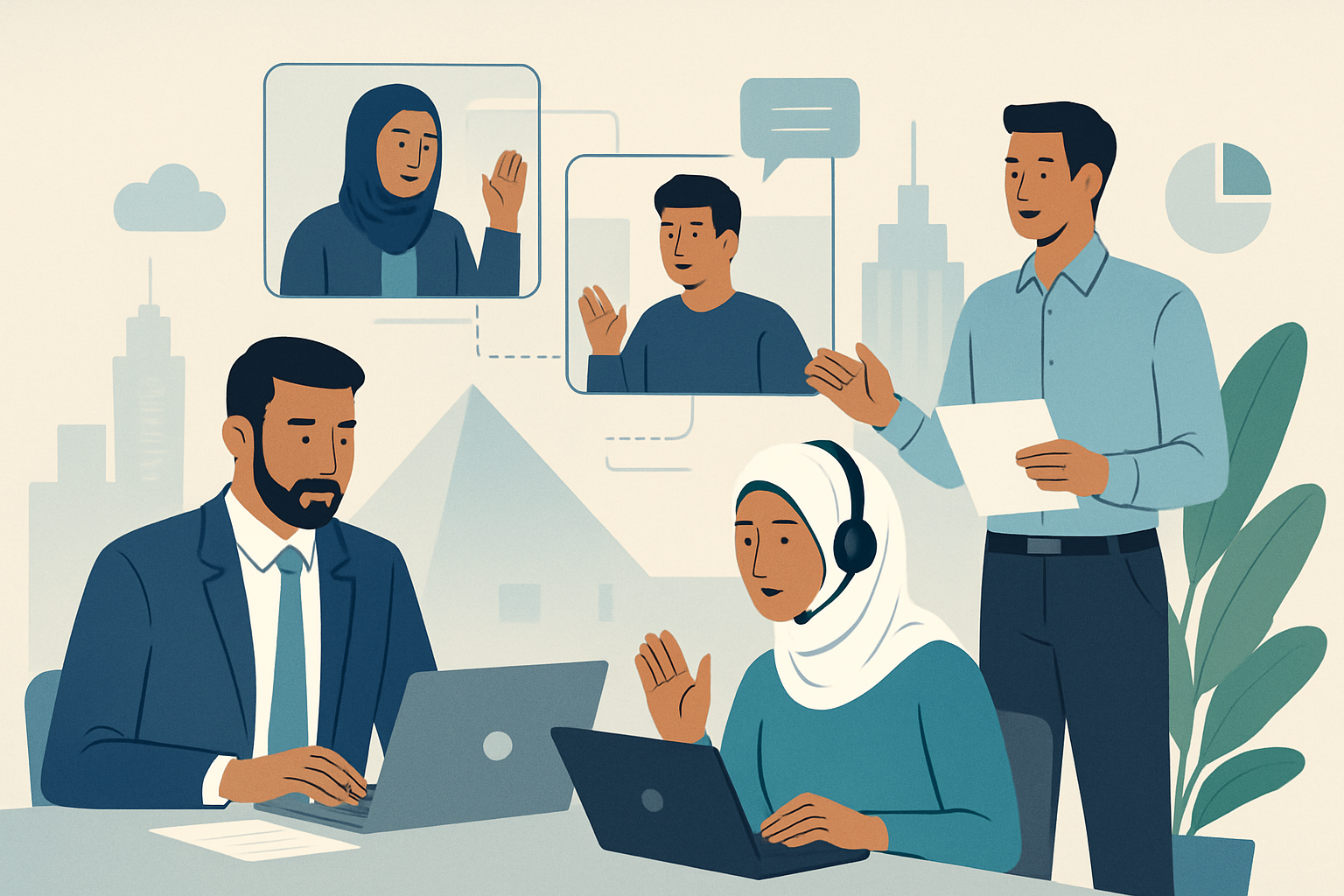

How Companies in Egypt Are Managing Remote and Hybrid Teams
Companies in Egypt manage remote and hybrid teams by implementing structured asynchronous communication protocols, standardizing digital collaboration platforms, and measuring success through output rather than physical presence. Most enterprises in Cairo now operate on a two to three day in-office schedule while utilizing cloud-based project management systems to sustain productivity across distributed workforces. This operational model addresses infrastructure constraints and rising commercial rents while delivering the flexibility that top talent expects in 2026.
The Shift Toward Flexible Work Models in Cairo
The corporate environment in Egypt has undergone a fundamental transformation. What initially emerged as a temporary contingency has matured into a permanent organizational strategy. Business leaders now understand that geographic flexibility directly correlates with employee retention, reduced operational expenditures, and expanded talent pools beyond major metropolitan centers. Organizations are deliberately engineering policies that accommodate diverse home environments, commuting realities, and personal responsibilities without sacrificing service quality or strategic alignment.
Why Egyptian Employers Prioritize Hybrid Arrangements
Companies headquartered in New Cairo, Zamalek, and the Sixth of October City increasingly adopt hybrid frameworks because they balance collaboration needs with financial prudence. Office leasing costs, employee transportation expenses, and daily commute fatigue remain primary drivers behind flexible scheduling. By mandating in-office attendance two or three days per week, executives preserve valuable face-to-face interaction for brainstorming sessions, complex negotiations, and relationship building. The remaining days function as dedicated focus periods where staff execute independent tasks without interruption. This structured rotation also streamlines facility utilization, allowing organizations to downsize square footage while maintaining high occupancy rates during peak collaborative windows.
Overcoming Infrastructure Challenges
Network reliability and electrical stability continue to shape how enterprises design their distributed work policies. Forward-looking employers address these variables through proactive support systems and redundant technical architectures. Human resources departments frequently allocate stipends for premium broadband packages, distribute cellular hotspots for backup connectivity, and approve ergonomic home workstation upgrades. Information technology teams conduct periodic security audits to verify secure file transmission, multi-factor authentication compliance, and data classification adherence. Management also establishes clear escalation pathways for service interruptions, ensuring that critical deadlines never stall due to predictable regional fluctuations.
Core Strategies for Managing Distributed Teams Effectively
Sustainable remote management depends on deliberate process engineering rather than reactive supervision. Organizations that excel in 2026 have systematically replaced attendance tracking with outcome-driven frameworks. These frameworks prioritize transparency, documented workflows, and consistent milestone reviews that respect individual productivity rhythms while enforcing accountability.
Asynchronous Communication Protocols
Cross-location coordination becomes efficient when teams embrace written-first communication practices. Leading companies establish core overlap hours between ten in the morning and four in the afternoon Cairo time. Outside these windows, staff rely on recorded video updates, comprehensive project briefs, and centralized documentation repositories instead of expecting immediate replies. Mandatory agenda distribution twenty-four hours before scheduled discussions prevents unproductive meeting sprawl. Decision authority migrates toward written approvals, threaded feedback loops, and version-controlled drafts, which reduces dependency on synchronous calls that often exclude crucial stakeholders or fragment deep work periods.
Structured Collaboration Tools and Platforms
Standardizing software ecosystems eliminates fragmentation and guarantees uniform access to enterprise resources. Most Egyptian corporations deploy integrated suites combining task boards, document libraries, virtual whiteboards, and persistent chat channels. Cybersecurity divisions enforce single sign-on verification, encrypted data pipelines, and automated cloud backups to protect intellectual property. Continuous training programs run quarterly so team members master advanced features, troubleshoot common connectivity issues, and follow standardized naming conventions for shared files. When everyone utilizes the same technological foundation, supervisors obtain real-time visibility into project velocity without deploying intrusive monitoring applications.
Leadership and Culture in a Decentralized Workplace
Maintaining organizational cohesion when leadership and workforce operate across different locations requires intentional investment. Executives who succeed treat cultural alignment as a strategic imperative rather than a secondary benefit. They fund virtual connection rituals, communicate values through measurable actions, and deploy recognition systems that travel seamlessly across time zones and office boundaries.
Building Trust Without Physical Oversight
Trust develops faster when managers delegate authority alongside clear responsibilities. Effective supervisors avoid screen tracking, keyboard logging, or mandatory camera activation during independent work blocks. Instead, they define precise deliverables, supply necessary resources, and withdraw until target dates arrive. Weekly one-on-one conversations concentrate on career progression, obstacle removal, and sustainable pacing rather than activity surveillance. When leaders openly acknowledge their own workflow adjustments and schedule modifications, employees respond with heightened reliability and proactive issue resolution.
Aligning Performance Metrics with Output
Traditional timesheet methodologies prove counterproductive in distributed environments. Modern Egyptian corporations evaluate contributions through objective indicators such as project delivery timelines, client retention rates, deployment frequency, revenue attribution, or support ticket resolution speed. Automated dashboards refresh continuously, eliminating subjective bias from quarterly evaluations. Advancement criteria shift toward demonstrated expertise, cross-team mentoring, and process optimization initiatives instead of desk visibility or institutional tenure. This results-focused approach attracts high-caliber candidates and drives continuous skill development across every organizational tier.
Actionable Steps for HR Leaders and Managers in Egypt
Implementing durable flexible work policies requires systematic execution and localized adaptation. Professionals navigating this evolving landscape can strengthen their positioning by browsing curated listings for jobs in Egypt or exploring dedicated remote jobs that align with modern operational standards. When searching for opportunities, candidates should utilize a trusted recruitment portal to search jobs on DrJobPro and filter verified employers offering structured hybrid contracts. Building a compelling professional presence begins the moment you create your free profile and upload validated certifications, portfolio projects, and quantified achievements for immediate recruiter visibility.
Organizations aiming to scale their remote capabilities should implement the following operational steps:
– Draft comprehensive hybrid guidelines covering expected office days, equipment reimbursement limits, cybersecurity compliance rules, and emergency notification procedures.
– Launch a centralized procurement portal where employees submit hardware requests, software license expansions, or ergonomic assessments for rapid executive review.
– Replace status-update meetings with biweekly roadblock clearing sessions that focus exclusively on resource allocation and timeline adjustments.
– Establish localized mentorship pairings connecting junior analysts with senior strategists across different branches to accelerate knowledge transfer.
– Host quarterly on-site strategy summits for vision alignment, hands-on workshops, and relationship building that cannot be replicated through virtual screens.
– Benchmark compensation packages against current market rates in Cairo to prevent attrition caused by pay discrepancies between remote and on-site roles.
– Integrate co-working hub memberships for professionals residing outside central business districts, ensuring reliable infrastructure without long commutes.
– Train department heads on psychological safety principles, inclusive meeting facilitation techniques, and conflict resolution methods tailored to digital communication channels.
Frequently Asked Questions
How do Egyptian companies handle internet outages for remote workers?
Organizations typically provide stipends for dual internet service providers, distribute mobile hotspot devices for temporary connectivity, and maintain backup office floors where staff can relocate during extended service interruptions. IT departments also archive critical workflows locally so progress remains protected during network downtime.
What is the standard hybrid schedule for most workplaces in Cairo?
The majority of enterprises require employees to attend the office two to three days per week, commonly rotating Wednesday and Friday presence while reserving Monday through Tuesday for independent focus work. Some technology firms allow floating in-person days aligned with sprint planning cycles or client presentations.
Can remote employees in Egypt expect the same benefits as on-site staff?
Yes, forward-thinking employers extend identical health insurance coverage, annual leave allowances, performance bonuses, and professional development budgets to fully remote personnel. Equal compensation structures remain essential for retaining top talent and complying with emerging flexible work regulations in 2026.














