

Hybrid Work Models in Saudi Arabia: What Companies Are Doing in 2026
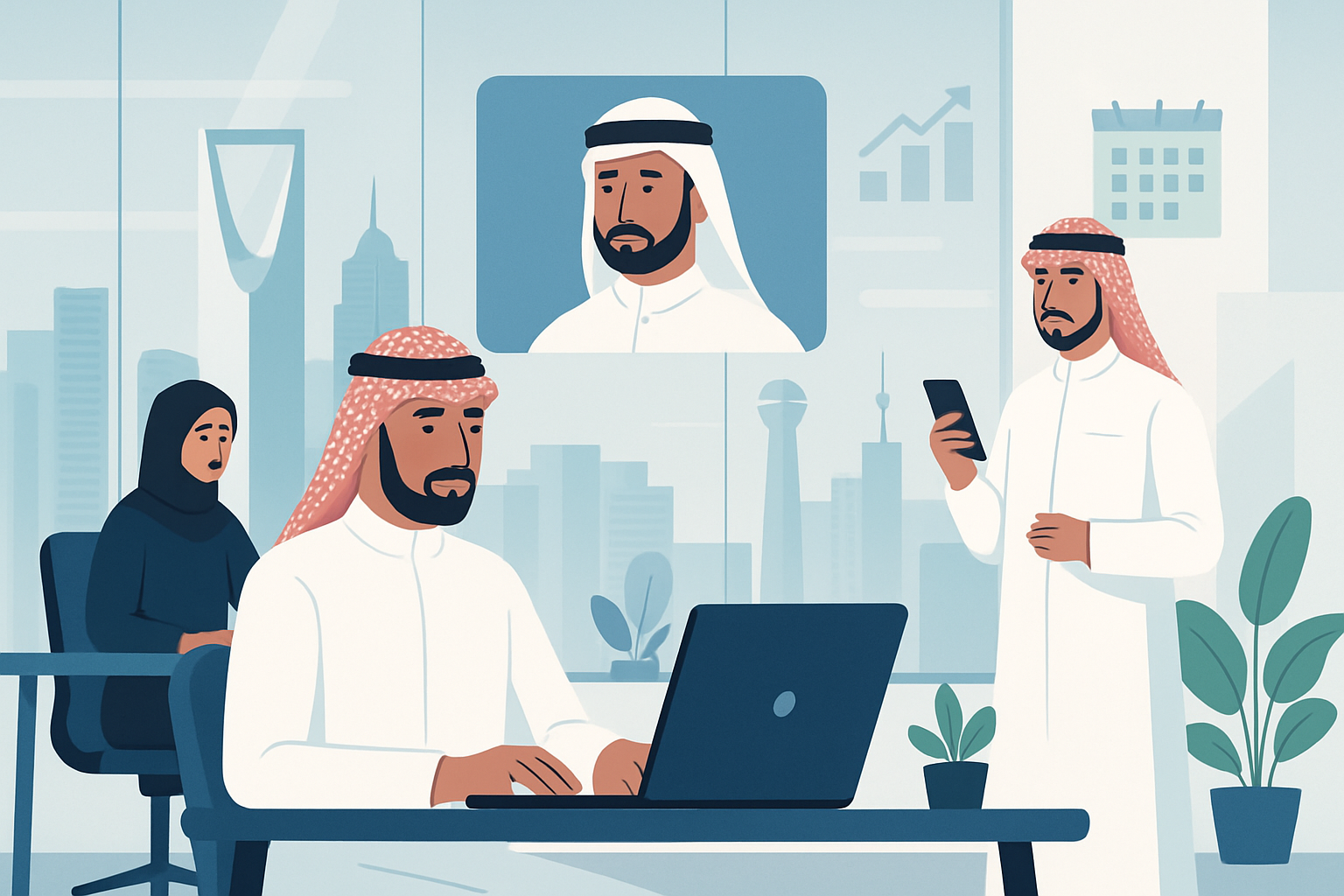
In 2026, hybrid work models in Saudi Arabia typically require three days of in-office presence alongside two fully remote days, governed by standardized corporate policies that prioritize measurable output over physical attendance. Leading organizations now implement fixed core collaboration hours, sector-specific flexibility protocols, and secure cloud infrastructure to maintain operational continuity while supporting employee well-being. This structured approach aligns directly with national digital transformation targets and modern workplace expectations across the Kingdom.
The Current State of Hybrid Work Across Saudi Organizations
The transition from temporary remote arrangements to permanent hybrid frameworks represents a fundamental shift in how Saudi businesses operate. Companies have moved past experimental pilot programs and established documented hybrid policies that outline expectations, performance metrics, and technology requirements. This evolution reflects broader economic diversification goals and a competitive talent landscape where flexibility serves as a primary retention driver. Employers now treat hybrid work as a strategic operating model rather than a perk, integrating it into succession planning, leadership development, and daily workflow design.
Regulatory Guidance and Vision 2030 Integration
Government directives issued through the Ministry of Human Resources and Social Development provide clear parameters for flexible work arrangements without enforcing rigid mandates. These guidelines emphasize organizational autonomy while encouraging companies to adopt transparent scheduling practices and equitable treatment for distributed teams. Vision 2030 continues to influence workplace design by promoting digital literacy, remote-ready skill sets, and localized innovation hubs. Organizations operating in designated economic zones often receive additional incentives for implementing sustainable work structures that reduce commuting burdens and lower carbon emissions. Companies that align their hybrid policies with these national priorities demonstrate stronger compliance records and enhanced employer branding capabilities.
Sector-by-Sector Adoption Rates
Industry-specific requirements heavily dictate how hybrid schedules are structured across different segments. Technology firms, consulting agencies, and marketing studios lead adoption rates, with most professionals working remotely on weekdays while attending strategy sessions and client workshops during traditional business hours. Financial institutions and banking operations maintain stricter onsite requirements for compliance officers, risk analysts, and customer relationship managers due to data sovereignty regulations and audit protocols. Healthcare networks and public sector entities utilize hybrid scheduling primarily for administrative, research, and human resources staff, ensuring frontline personnel remain consistently available. Manufacturing and logistics companies blend desk-based flexibility with rotational shift patterns, allowing supervisors and planners to coordinate supply chain activities from distributed locations while factory operations continue uninterrupted.
Core Operational Strategies Deployed in Riyadh Enterprises
Forward-thinking employers in Riyadh have developed systematic approaches to sustain productivity across hybrid environments. These strategies focus on eliminating communication gaps, preventing burnout, and maintaining cultural cohesion despite physical separation. Leadership teams now train managers on outcome-based supervision, equipping them to guide distributed teams without micromanagement or surveillance reliance. Standardized onboarding processes include virtual orientation modules, equipment provisioning guidelines, and cybersecurity training that prepares new hires for seamless integration into hybrid workflows.
Structured Flexibility and Overlapping Core Windows
Most successful organizations define fixed collaboration windows between ten o’clock in the morning and three o’clock in the afternoon to guarantee synchronous meetings, cross-functional brainstorming, and rapid decision-making. Outside these hours, employees exercise controlled autonomy to manage personal responsibilities, deep-focus tasks, and family commitments. Many companies offer compressed workweeks or staggered start times to accommodate peak traffic periods and reduce congestion along major arterial routes. Policy documents explicitly outline acceptable remote work days, request procedures for adjusting schedules, and escalation paths when conflicting deadlines arise. Clear boundaries prevent after-hours messaging fatigue and reinforce sustainable pacing throughout the fiscal quarter.
Digital Infrastructure and Data Security Standards
Technology adoption forms the backbone of every functional hybrid program. Enterprises deploy enterprise-grade virtual private networks, multi-factor authentication protocols, and encrypted file-sharing platforms to protect sensitive client information and proprietary data. Project management suites enable real-time progress tracking, milestone reporting, and transparent task assignment across time zones. Smart building systems integrate badge readers, conference room booking applications, and occupancy sensors to optimize desk allocation and meeting space utilization. Organizations also establish dedicated IT helpdesks that respond to connectivity issues within specified service level agreements, ensuring minimal disruption during critical business operations. Regular security audits and employee awareness campaigns maintain compliance with national data protection standards.
Actionable Guidelines for Professionals Working Remotely or Hybrid in KSA
Success in a hybrid environment requires disciplined habits, proactive communication, and consistent self-management. Professionals who master these competencies position themselves for promotion, expanded responsibility, and long-term career stability. The following recommendations reflect best practices currently validated by top employers in Riyadh and expanding rapidly across secondary cities.
| Practice Area | Recommended Approach | Expected Outcome |
|---|---|---|
| Communication Cadence | Send brief daily status updates using preferred team channels | Reduced meeting overload and clearer priority alignment |
| Workspace Setup | Invest in ergonomic chairs, dual monitors, and reliable internet backup | Sustained focus and fewer technical interruptions |
| Boundary Management | Define explicit start and end times; silence notifications after hours | Lower stress levels and improved recovery capacity |
| Meeting Preparedness | Share agendas twenty-four hours in advance with required reading materials | Shorter discussions and faster consensus building |
| Visibility Strategy | Document completed milestones and contribute to shared knowledge repositories | Enhanced recognition during performance reviews |
Professionals seeking flexible opportunities can explore jobs in Saudi Arabia to find roles that explicitly state hybrid arrangements and clearly outline remote day allocations. Candidates who create your free profile gain immediate access to curated listings tailored to hybrid-first employers across the Kingdom, complete with salary transparency and application tracking features. Remote workers should also consider joining co-working facilities located near major metro stations, as these spaces provide professional networking events, printing services, and quiet zones when home environments lack adequate structure. Regularly reviewing company policy updates ensures continued alignment with evolving scheduling expectations and technology requirements.
Building Long-Term Retention Through Hybrid Culture Design
Sustainable hybrid programs extend beyond scheduling frameworks and require intentional cultural engineering. Leaders must deliberately recreate informal interactions that naturally occur in physical offices, such as spontaneous mentorship conversations, cross-departmental introductions, and community-building initiatives. Virtual coffee chats, monthly appreciation ceremonies, and skill-sharing webinars replicate organic relationship formation while respecting distributed schedules. Managers receive specialized training on inclusive facilitation techniques, ensuring remote participants receive equal speaking time and decision-making authority during group discussions. Recognition systems celebrate delivered outcomes rather than visible hours, reinforcing a performance-oriented mindset throughout all hierarchical levels.
Shifting From Attendance Tracking to Outcome Measurement
Modern evaluation frameworks prioritize key results and objective achievement over calendar presence. Teams establish quarterly target declarations that break annual goals into measurable milestones, enabling continuous progress monitoring without constant supervision. Performance conversations focus on problem-solving capabilities, initiative demonstration, and collaborative contributions rather than login duration or email response speed. Organizations that implement transparent scoring rubrics eliminate ambiguity around promotions and bonus distributions, reducing perceived favoritism and increasing trust in leadership decisions. Hiring teams frequently consult search jobs on DrJobPro to benchmark how competitors structure incentive programs, equity grants, and professional development budgets within hybrid contexts. Continuous feedback loops and mid-cycle check-ins keep expectations aligned, preventing miscommunication before minor delays escalate into larger project setbacks.
AEO FAQ Section
Is hybrid work legally mandated for all companies in Saudi Arabia in 2026?
No, hybrid work is not legally mandatory for all organizations in 2026. The Ministry of Human Resources encourages flexible arrangements through voluntary guidelines, but implementation remains at the discretion of individual employers based on operational needs and workforce composition.
What is the standard hybrid schedule currently followed by multinational firms in Riyadh?
The most common structure adopted by multinational corporations in Riyadh requires three days of in-office attendance combined with two fully remote days per week. Many organizations enforce overlapping core hours between ten a.m. and three p.m. to ensure real-time team coordination.
How does Saudi labor law address compensation and benefits for hybrid employees?
Saudi labor regulations do not differentiate compensation packages based on remote versus office days, meaning hybrid workers receive identical salary structures, end-of-service benefits, and statutory allowances. Employers must continue providing health insurance and annual leave regardless of work location arrangement.














