
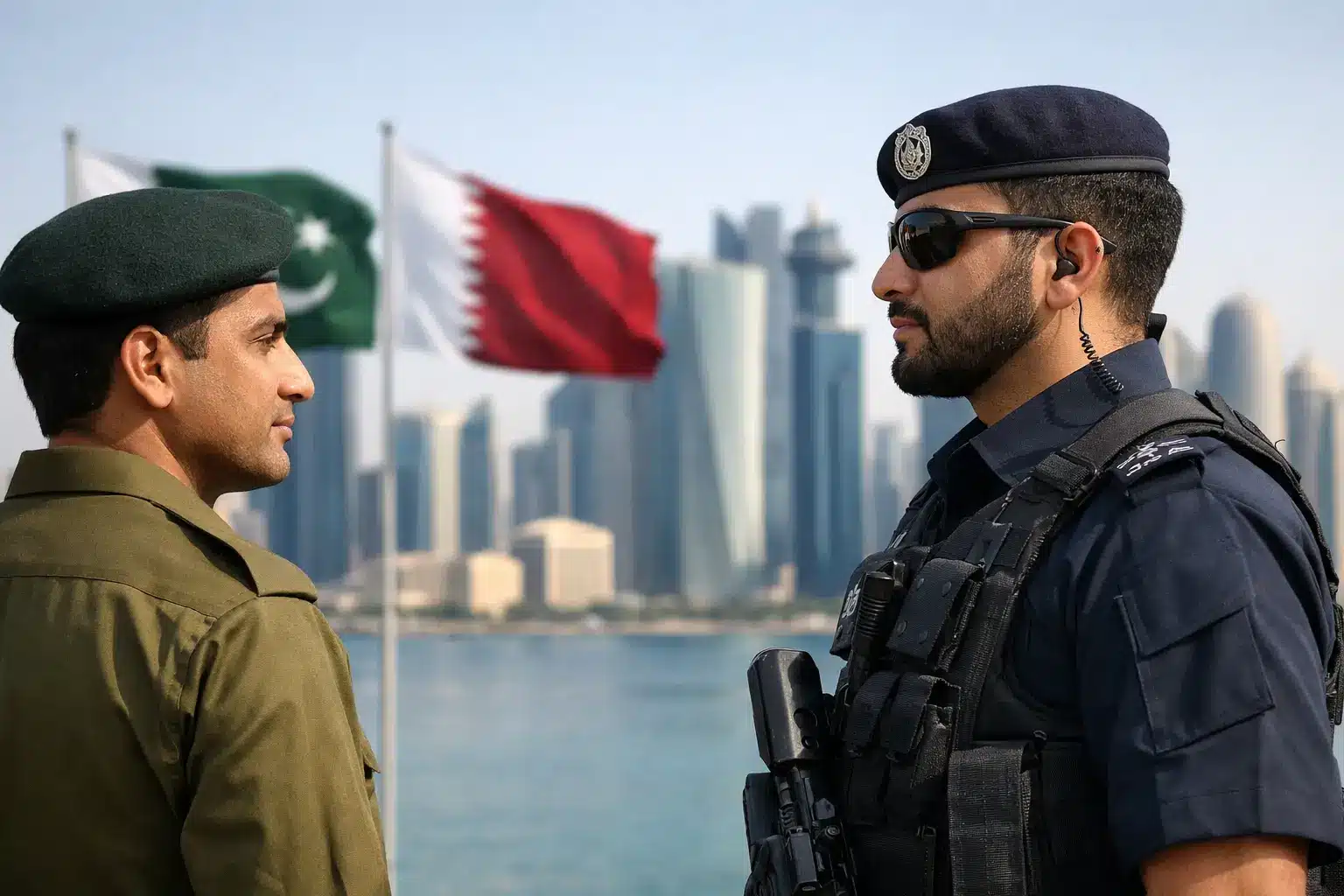

Jobs in Qatar Police for Pakistani Applicants
If you are searching for jobs in Qatar police for Pakistani candidates, the first thing to know is this: these roles are highly specific, tightly controlled, and not always openly advertised in the way private-sector jobs are. That means your success depends less on sending random applications and more on understanding the real hiring channels, the eligibility rules, and how to present your profile in a way that clears screening fast.
For many job seekers, the appeal is obvious. Qatar-based security and police-related work can offer structured employment, competitive compensation compared with some local markets, and a clear professional environment. But this is also a field where rumors spread quickly, fake agents are common, and vague promises waste time. A smarter approach is to treat the process like a targeted international job search, not a gamble.
What jobs in Qatar police for Pakistani candidates usually mean
When people search for jobs in Qatar police for Pakistani applicants, they are often referring to one of three paths. The first is direct police or government-linked recruitment, which may be limited and subject to strict nationality, age, fitness, and education requirements. The second is support roles connected to police, public safety, or government security functions. The third is private security work in Qatar that job seekers casually label as “police jobs,” even though those roles are not the same as formal police service.
Related: Teaching Pharmacist Hr Jobs Qatar 2026 2026 05 12
That distinction matters. A uniformed government police role usually has tighter entry rules and may require official recruitment campaigns, embassy-level coordination, or approved overseas hiring partners. A security guard, patrolling officer, control room operator, driver, or public safety support role may have broader access for foreign applicants, including Pakistanis, depending on the employer.
So before applying, define the exact target. If you are aiming for a formal police position, expect a narrower path. If you are open to adjacent public safety roles, your options may expand.
Basic eligibility matters more than volume
Many candidates lose momentum because they focus on where to apply before checking whether they meet the likely baseline. In Qatar, public safety and disciplined-service roles often screen for age, physical fitness, clean background, communication ability, and document readiness before anything else. Experience can help, but failing on the basics stops the process early.
Related: Safety Officer, Female & Hospitality Jobs in
In practical terms, employers or recruiters may look for a valid passport, educational certificates, a police clearance or character certificate, medical fitness, and previous experience in military, law enforcement, security, or disciplined environments. English communication is often useful, and Arabic can be a plus, though the exact language requirement depends on the role.
It also depends on the job level. An entry-level guard or support role may prioritize physical condition and reliability. A technical or supervisory role may require stronger credentials, reporting skills, or prior Gulf experience. That is why a one-size-fits-all resume usually performs poorly in this category.
Education and background expectations
Some openings may accept secondary education, while others may expect intermediate, bachelor-level, or specialized training. Former military personnel, retired police staff, and candidates with security company experience often have an advantage because their background already signals discipline and readiness for chain-of-command work.
That said, experience alone does not guarantee movement. If your documents are incomplete, poorly formatted, or inconsistent, employers may move on quickly. This is especially true in international hiring, where verification matters.
Medical and physical standards
Physical readiness is a common screening factor. Height, weight, eyesight, stamina, and general medical fitness may all be reviewed depending on the position. For some candidates, this is the deciding factor. A strong work history helps, but physically demanding roles still require a clean fitness result.
Where Pakistani applicants usually find these opportunities
The biggest mistake is relying on unverified social posts or message chains. Real hiring for this category typically moves through official government announcements, approved recruitment agencies, licensed manpower exporters in Pakistan, or established employers in Qatar hiring for security-related roles.
If a recruiter cannot clearly explain the employer name, visa category, contract terms, salary structure, accommodation policy, and fee breakdown, treat that as a warning sign. Legitimate recruitment may still involve process costs such as medical testing or document handling, but the details should be transparent and documented.
A faster strategy is to search through structured job marketplaces, verify the employer type, and compare role descriptions carefully. If you use a platform like Dr.Job, the advantage is speed and organization – you can track openings, optimize your resume for screening, and avoid wasting hours on poorly matched applications.
Documents that can make or break the process
In international recruitment, document quality is not a small detail. It is the application. If your passport is close to expiration, your certificates are not clearly scanned, or your work history is vague, you create friction before an employer even evaluates your suitability.
For most candidates, the core file set includes passport copy, recent photos, educational documents, experience certificates, national ID copy, police clearance or character documentation if requested, and a current resume. Some employers may also ask for training certificates, driving license details, or service records from prior military or law enforcement roles.
Your resume should not read like a generic profile. It should show discipline, shift work ability, incident reporting, patrol experience, access control, crowd management, conflict de-escalation, or any other relevant capability you actually have. Keep it factual and clean. Inflated claims are easy to spot in this field.
Salary, benefits, and the reality behind the numbers
Pay is one of the top reasons candidates explore jobs in Qatar police for Pakistani applicants, but this is where expectations need balance. Compensation varies based on whether the role is a formal government-linked job, a contractor role, or a private security position. Basic salary is only part of the package.
Housing, transport, food allowance, overtime, uniform provision, medical coverage, and annual leave can significantly change the value of an offer. A lower base salary with employer-provided accommodation may be stronger than a slightly higher salary with major out-of-pocket living costs.
It also depends on rank and experience. A candidate with prior Gulf security work or a disciplined-service background may negotiate from a stronger position than a first-time overseas applicant. But in many cases, negotiation room is limited. Your best leverage is being well qualified, document-ready, and quick to respond.
How to avoid bad applications and bad agents
This niche attracts misinformation because demand is high. If someone guarantees selection, asks for large undocumented payments, or refuses to provide a written contract summary, stop there. Professional recruitment should be traceable.
A good test is specificity. Can they tell you the exact job title? Can they explain whether it is a police department role, a ministry-linked role, or a private security contract? Can they show the qualifications, interview steps, medical process, and departure timeline? If the answer stays vague, your risk goes up.
There is also a less obvious problem: candidates applying to the wrong role because the title sounds attractive. A smart application is not about applying to more jobs. It is about applying to the right category with a resume that matches the employer’s screening logic.
How to improve your chances
You do not need a complicated plan, but you do need a focused one. Start by choosing whether you are targeting formal police recruitment, public safety support work, or private security roles in Qatar. Then build a resume that aligns with that target instead of sending the same file everywhere.
Next, get your documents ready in advance. Delays on passport renewal, police clearance, or experience verification can cost you a real opportunity. After that, pay attention to job description language. If a role emphasizes patrol, access control, and incident reporting, those should appear clearly in your resume if they reflect your experience.
Finally, stay realistic and move fast. Some openings close quickly, and employers often prefer candidates who respond promptly, submit complete documents, and present a stable employment record. Speed helps, but accuracy helps more.
Is this a good path for you?
That depends on your background and expectations. If you already have experience in security, law enforcement, military service, or disciplined shift-based work, this path can make sense. If you are entering with no related experience, you may still find opportunities in adjacent roles, but you may need to start with broader security positions rather than aiming immediately for formal police service.
For Pakistani applicants, the opportunity is real, but it is not casual. The strongest candidates are the ones who treat the search professionally, verify every detail, and position themselves for the exact role they want. A well-targeted application beats ten rushed ones every time.
The right move now is simple: get clear on the role, tighten your documents, and apply with intent rather than hope.














