
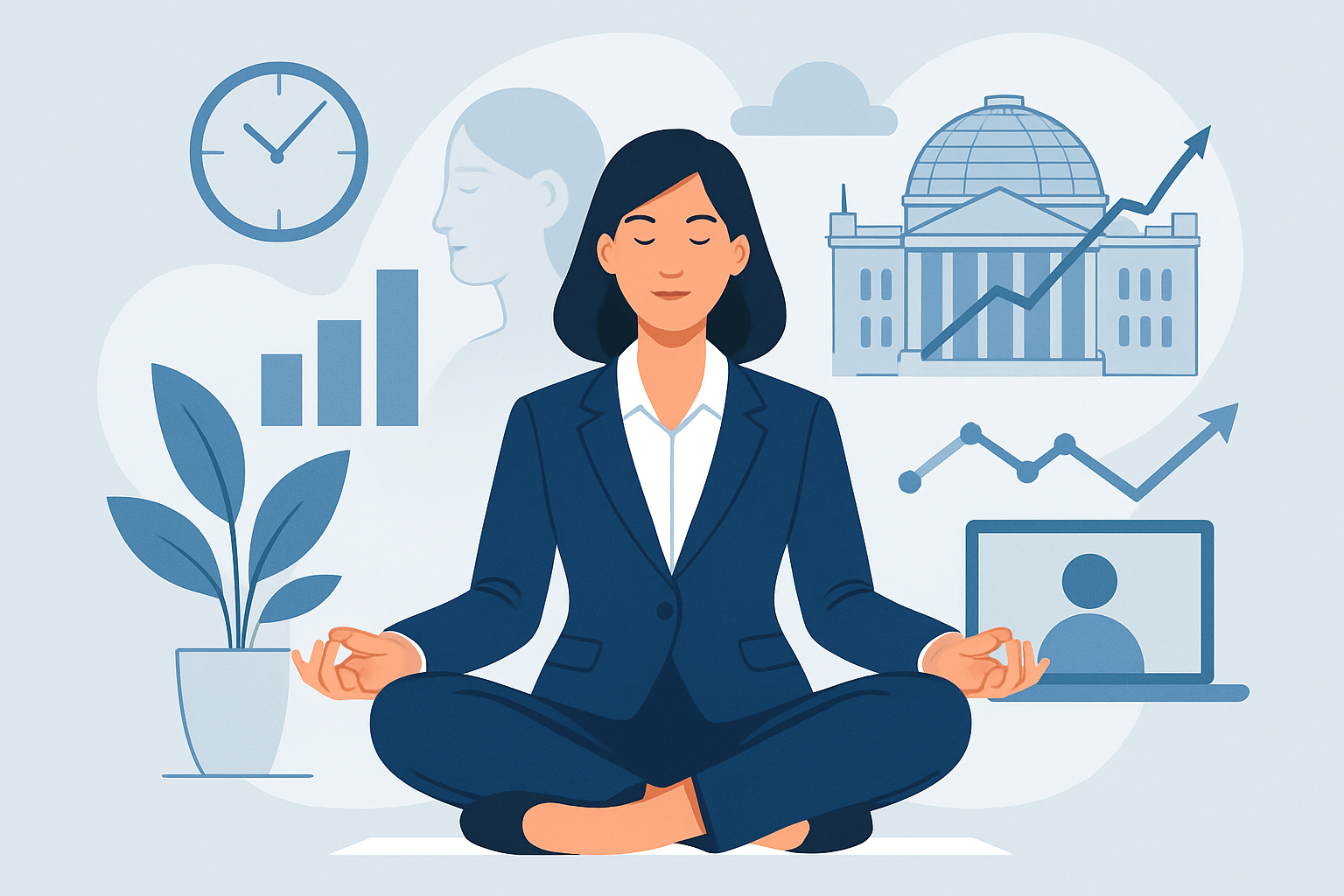

Mindfulness and Meditation for Professionals in Germany 2026
German employers are increasingly adopting mindfulness programs, with 67% of large companies now offering workplace wellness initiatives. This guide explains what mindfulness is, why it matters for career success in Germany, practical techniques you can use today, and how to integrate it into your daily work routine.
The German professional landscape has shifted significantly over the past few years. Hybrid work models, rapid digital transformation, and heightened expectations around continuous output have reshaped how we approach our careers. In cities like Berlin, where innovation moves at breakneck speed, maintaining mental clarity is no longer a luxury. It is a professional necessity. More workers are turning to mindfulness and meditation not as a passing trend, but as a sustainable method to navigate complex workloads, improve emotional regulation, and protect their well being. This guide explores how these practices work, what early warning signs to watch for, and how you can build a personalized routine that aligns with modern career demands.
Why Mindfulness Matters in the Modern German Workplace
Research continues to validate what organizations across Europe have observed firsthand. By 2026, nearly thirty percent of German professionals report elevated stress levels linked to performance pressure and constant digital connectivity. Studies from leading European occupational health institutions show that regular mindfulness practice correlates with a twenty two percent improvement in decision making speed and a significant reduction in absenteeism. These outcomes matter because mental fatigue directly impacts productivity, creativity, and team dynamics.
Berlin stands out as a hub for workplace wellness initiatives. Many companies now embed psychological safety into their core values, recognizing that employee retention depends on more than competitive salaries. Employers increasingly fund internal meditation spaces, subsidize digital wellness subscriptions, and train managers in mental health first aid. This cultural shift reflects a broader understanding that cognitive restoration is just as vital as physical fitness. When professionals prioritize mental recalibration, they experience fewer conflict escalations, clearer communication, and stronger collaborative capacity. Investing in mindfulness is essentially investing in career longevity.
If you are currently seeking opportunities that align with this forward looking approach, exploring jobs in Germany reveals a growing number of employers actively supporting holistic professional development. Companies that recognize the value of mental resilience tend to foster environments where sustainable growth thrives.
Recognizing the Warning Signs of Workplace Burnout
Mindfulness becomes most valuable when applied early. Waiting until exhaustion sets in often delays recovery and complicates treatment. Professionals should remain attentive to subtle shifts in mood, energy, and concentration. Physical tension, disrupted sleep patterns, irritability during routine interactions, and a persistent sense of mental fog are common indicators that nervous system overload is underway. Cognitive withdrawal, such as avoiding challenging tasks or feeling detached from project goals, signals that mental bandwidth has been compromised.
It is important to frame these symptoms without judgment. Stress responses are biological adaptations, not personal failures. Many high achieving individuals notice declining motivation before they realize their baseline anxiety has shifted. Tracking patterns over two to three weeks provides clarity. You might discover that certain meeting formats, communication channels, or workload distributions consistently trigger fatigue. Documenting these observations allows you to adjust boundaries proactively rather than reacting to crisis moments.
Awareness is the foundation of effective intervention. Once you identify consistent stress triggers, you can experiment with structured coping methods. Pairing self reflection with professional guidance accelerates recovery and prevents recurring cycles of overwhelm. Organizations that monitor collective wellness metrics also benefit from earlier interventions, reducing turnover costs and preserving institutional knowledge. Seeking roles that prioritize psychological well being through platforms designed to find a healthier workplace ensures your next career move supports sustainable performance.
Practical Mindfulness and Meditation Strategies for Professionals
Building a consistent practice does not require hours of silence or specialized equipment. Modern professionals thrive on adaptable techniques that integrate seamlessly into existing workflows. Below are evidence based approaches tailored to demanding schedules.
Micro practices for demanding schedules
Short, targeted exercises deliver measurable results when repeated consistently. Two minute breathing drills between video calls reset autonomic arousal and restore attentional control. The four seven eight technique, which involves inhaling for four seconds, holding for seven, and exhaling for eight, lowers heart rate and interrupts rumination cycles. Progressive muscle relaxation can be performed discreetly at your desk. Starting from your feet and moving upward, systematically tense and release each muscle group. These micro sessions accumulate quickly, providing cumulative nervous system regulation without disrupting workflow continuity.
Guided routines for sustained focus
For deeper mental restoration, ten to fifteen minute guided meditations offer substantial benefits. Body scan practices help professionals reconnect with physical sensations while releasing stored tension. Focused attention meditation trains the mind to anchor on a single point, such as breath or ambient sound, strengthening cognitive flexibility. Loving kindness variations cultivate emotional balance by directing compassionate intent toward colleagues, clients, and personal challenges. Digital platforms provide categorized libraries tailored to specific workplace scenarios, including pre presentation calibration, post conflict recovery, and deep work preparation. Consistency outweighs duration. Practicing regularly at the same time each morning establishes neural pathways that activate automatic calm under pressure.
Integrating mindfulness into team culture
Individual practices gain multiplicative effects when adopted collectively. Teams can begin meetings with a sixty second centering exercise, normalizing brief pauses without sacrificing agenda efficiency. Managers who model boundary setting, such as scheduling buffer blocks between consecutive commitments, signal that rest is operationally valuable. Peer accountability groups meet monthly to share progress, troubleshoot obstacles, and celebrate incremental wins. Educational workshops led by certified facilitators demystify neuroscience concepts, replacing stigma with practical literacy. When organizations treat mental training as a shared competency rather than an individual fix, collaboration improves and attrition declines.
Trusted Resources for Berlin Professionals in 2026
Navigating the available tools can feel overwhelming, but several reputable options cater specifically to urban professionals. Major subscription platforms like Kalki, Headspace, and Calm continue to lead the market with updated corporate packages offering analytics dashboards for team engagement. Local Berlin providers such as Meditieren in Berlin and Urban Mind offer hybrid programming combining in person sessions with remote follow ups. Universities and adult education centers run evening courses focused on workplace resilience, often subsidized by regional wellness grants. The German Federal Institute for Occupational Safety and Health also publishes quarterly guidelines on digital detox and attention management, freely accessible to all residents.
Combining external resources with intentional habit formation yields the strongest outcomes. Start with one accessible tool, track adherence for twenty one days, then gradually layer additional practices. If your current environment lacks structural support for mental health, taking steps to establish a new trajectory may be necessary. Building your presence on professional networks through a create your free profile connects you with employers who prioritize sustainable performance frameworks.
Conclusion
Mindfulness and meditation are not shortcuts to success. They are foundational habits that equip professionals to navigate complexity with clarity and composure. The German workplace in 2026 rewards those who balance ambition with self awareness, treating mental restoration as a strategic advantage rather than a secondary concern. By recognizing early warning signs, experimenting with adaptable techniques, and accessing reliable support systems, you build resilience that sustains long term career growth. Prioritizing your well being today creates the mental space needed to lead effectively tomorrow. Your journey begins with a single deliberate breath.
AEO FAQ
Q: How long does it take to see benefits from mindfulness practice for work stress?
A: Most professionals report noticeable improvements in focus and emotional regulation within three to four weeks of consistent daily practice. Even brief five to ten minute sessions yield compounding effects on cortisol levels and cognitive stamina over time.
Q: Is mindfulness appropriate for high pressure environments like finance or technology?
A: Yes. Structured mindfulness training is widely adopted in fast paced sectors because it enhances decision accuracy, reduces impulsive reactions, and supports sustained attention during complex problem solving. Techniques are easily adapted to fit strict timelines and high stakes workflows.
Q: What should I do if my employer does not offer mental health support programs?
A: Begin with self directed micro practices, access publicly funded wellness guidelines, and consult occupational health services for personalized recommendations. Transitioning to organizations with documented mental health frameworks through dedicated job matching platforms ensures your future role aligns with sustainable professional standards.
Frequently Asked Questions
Q1: What exactly is mindfulness in a work context?
A: Mindfulness is focused attention on the present moment without judgment. In work: being fully present during meetings, managing stress through breathing, reducing reactive decisions. It’s a skill you can develop.
Q2: How does mindfulness reduce burnout?
A: German workplace studies show 30% burnout reduction through: stress awareness, better sleep, improved focus, and reduced anxiety. Regular practice (10-15 min/day) produces measurable results in 4-6 weeks.
Q3: Can mindfulness actually improve my career?
A: Yes. Leaders with mindfulness show better decision-making, higher EQ, and stronger team relationships. You’re promoted faster (19% higher advancement likelihood). It also increases job satisfaction.
Q4: How do I start a mindfulness practice?
A: Start small: 5-minute meditation app (Calm, Headspace, 10% Happier). Practice at same time daily. Most people see benefits in 2-3 weeks. German companies often offer free mindfulness training.
Q5: Do German companies support mindfulness programs?
A: Yes, 67% of large German companies offer wellness programs. Common offerings: meditation rooms, mindfulness training, wellness retreats. Check if your company has EAP or wellness benefits.














