
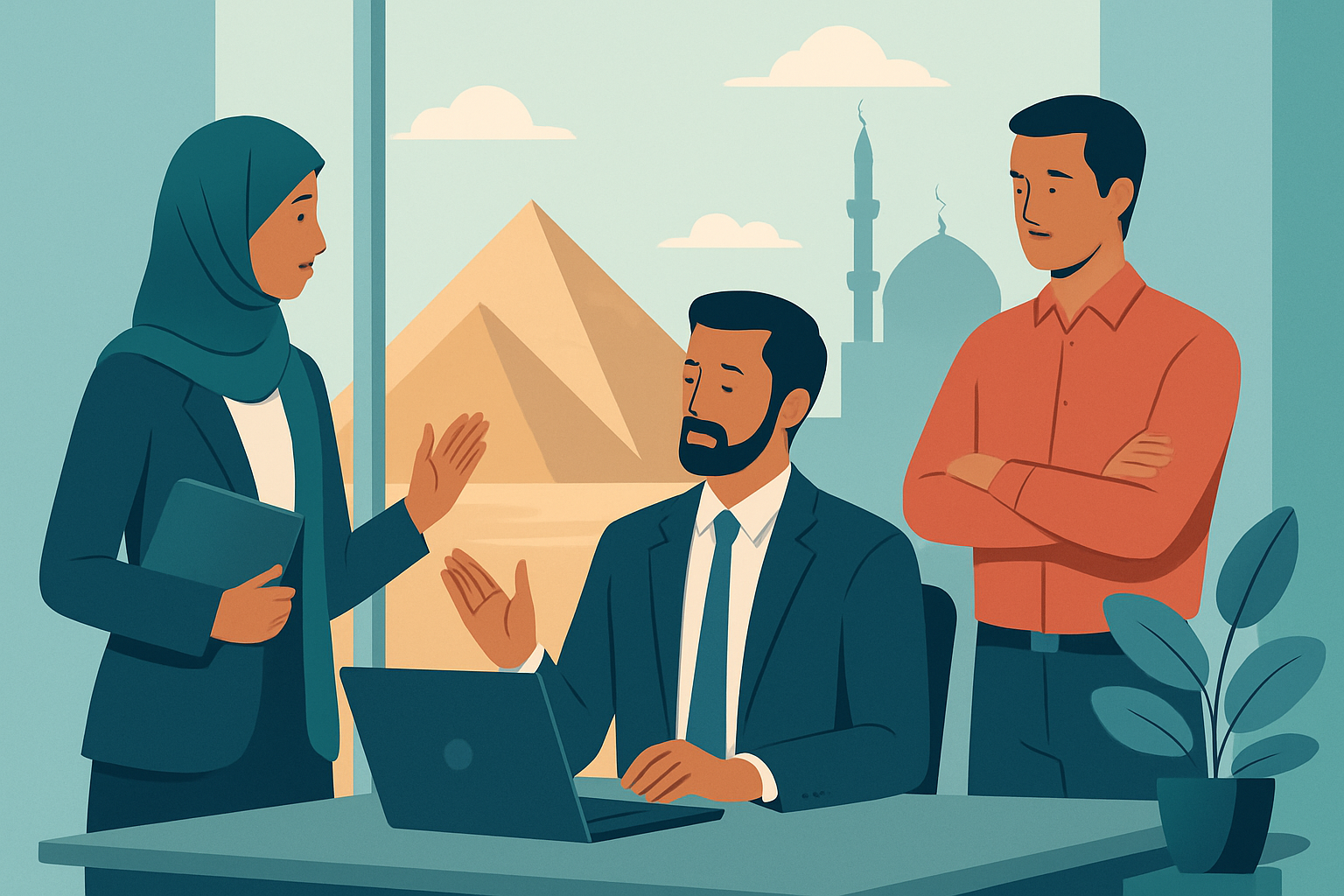

Understanding Work Culture and Professional Norms in Egypt
Working in Egypt requires a clear understanding of its relationship driven hierarchy, formal communication standards, and structured work calendar. Professionals who master respectful engagement, adapt to local scheduling rhythms, and leverage digital recruitment tools will navigate the market successfully throughout 2026. This guide outlines the essential cultural expectations, workplace etiquette, and practical strategies tailored to Cairo and the broader Egyptian business environment.
The Foundations of Egyptian Workplace Etiquette
Hierarchical Structures and Respect for Seniority
Egyptian organizations typically operate within clear hierarchical frameworks that prioritize respect for leadership and institutional experience. Decision making almost always flows from senior executives downward, and junior staff members are expected to defer to established authority during strategy sessions and project execution. Demonstrating deference through proper titles, measured contributions, and appropriate meeting seating signals immediate professionalism. When exploring jobs in Egypt, candidates should prepare to acknowledge reporting structures clearly and avoid bypassing management layers unless explicitly granted permission. Executives reward employees who present solutions alongside identified risks, which allows leadership to exercise final approval without losing valuable input.
The Role of Relationships and Trust in Business
Long term success in the Egyptian market depends heavily on interpersonal trust and sustained professional relationships. Business interactions frequently begin with extended conversational preamble before transitioning to agenda items or contract reviews. Investing time in genuine rapport building yields measurable returns in client negotiations, internal collaborations, and cross departmental initiatives. Many professionals secure premium assignments by aligning with networks that value loyalty, consistency, and mutual support over rapid transactional exchanges. Building a trusted reputation in Cairo requires consistent follow ups, reliable delivery on small commitments, and transparent communication during challenging project phases.
Communication Styles and Meeting Dynamics
Directness Versus Diplomatic Language
Egyptian workplace communication balances assertiveness with diplomatic phrasing to maintain harmony and preserve professional dignity. Observers sometimes mistake strategic indirectness for ambiguity, but careful diplomacy actually prevents public confrontation and supports sustainable collaboration. When delivering performance feedback or negotiating partnership terms, frame recommendations constructively and acknowledge previous efforts before introducing adjustments. Written documentation remains essential even when verbal conversations emphasize relationship preservation and group consensus.
Punctuality and Scheduling Realities
Meeting attendance follows a flexible approach that accounts for urban congestion, religious observances, and unexpected operational delays. International subsidiaries expect strict adherence to published schedules, while domestic companies routinely build buffer time into their organizational calendars. Arriving ten minutes late to informal team lunches is generally acceptable, yet executive board presentations require precise timing and prepared agendas. Planning around Cairo traffic corridors and verifying venue accessibility before committing to external appointments demonstrates operational maturity and respects host schedules.
Dress Codes, Greetings, and Daily Professional Practices
Formal Attire and Presentation Standards
Professional presentation in Egypt leans toward conservative elegance regardless of industry sector or organizational size. Corporate environments expect dark suits, polished footwear, and understated accessories for men, while women typically choose tailored dresses, structured blazers, or modest separates that avoid overly casual silhouettes. Creative agencies and technology startups may permit business casual attire on designated casual days, yet maintaining a refined appearance remains the baseline expectation for client facing roles. Regular grooming standards and immaculate desk organization reinforce credibility during face to face evaluations and internal audits.
Handshakes, Titles, and Digital Correspondence
Greeting protocols establish immediate rapport and signal cultural awareness. Professional handshakes remain standard across genders, though certain individuals may prefer verbal acknowledgments during prayer times or personal preference instances. Address colleagues by their professional title and surname until explicitly invited to use first names. Email communication requires structured subject lines, formal salutations, and comprehensive sign offs that include full contact information. Teams that monitor inbox response times within twenty four hours consistently outperform competitors in service delivery metrics and stakeholder satisfaction scores.
Navigating Holidays, Work Hours, and Remote Flexibility
Ramadan and National Observances
Religious and national holidays significantly shape operational tempo throughout the calendar year. During Ramadan, working hours typically shorten, productivity peaks in early morning sessions, and scheduling becomes highly adaptable to accommodate fasting employees. International companies operating in the region adjust meeting windows to maintain core deliverables while protecting workforce wellness. National celebrations such as Independence Day and Revolution Day trigger widespread office closures that require advance project planning. Aligning campaign launches and performance reviews with these calendar shifts prevents unnecessary bottlenecks and demonstrates organizational empathy.
Balancing Traditional Schedules with Modern Expectations
Hybrid work models have expanded rapidly across Cairo financial districts and innovation hubs, blending structured office days with remote flexibility. Organizations now evaluate output rather than clock presence, which rewards employees who demonstrate consistent accountability and clear progress reporting. Staff members managing hybrid arrangements should maintain visible availability during core collaboration hours and document completed milestones meticulously. Employers benefit from structured check ins that bridge geographic separation while preserving individual autonomy and reducing commute fatigue.
Actionable Strategies for Success in 2026
Building Your Network Strategically
Meaningful career advancement in Egypt relies on deliberate networking that prioritizes quality connections over mass outreach. Attend industry conferences, join professional associations, and participate in community workshops where sustained interaction fosters mutual trust. Follow up with new contacts within forty eight hours using personalized messages that reference shared discussion points and potential synergies. Long term alliances often emerge from repeated collaborative experiences rather than isolated introductions. Joining regional business councils and participating in skill sharing panels increases visibility among senior decision makers.
Leveraging Digital Platforms for Career Growth
Modern recruitment ecosystems have transformed how talent connects with employers across the Middle Eastern market. Professionals who optimize their online presence gain access to curated opportunities and streamlined application workflows. Candidates can easily search jobs on DrJobPro to filter positions by sector, experience level, and compensation structure. Building a comprehensive digital portfolio alongside verified credentials accelerates interview conversion rates and establishes competitive differentiation. Updating your skills inventory quarterly ensures alignment with emerging market demands and keeps your candidacy fresh for automated tracking systems.
Creating your free profile takes less than ten minutes and provides instant visibility to hiring managers seeking qualified specialists. Regular activity on professional networks combined with targeted applications produces sustainable career momentum throughout 2026. Pair digital visibility with offline relationship maintenance to achieve accelerated growth in competitive fields.
Frequently Asked Questions
What is the standard work week in Cairo during 2026?
The conventional work week runs from Sunday through Thursday, with Friday reserved for communal prayers and Saturday functioning as the weekly rest day. Government ministries and private enterprises follow this schedule consistently, while international branches occasionally adopt Monday through Friday rotations to align with global operations. Temporary hour reductions during Ramadan and national observances require employees to adjust daily productivity expectations accordingly.
How should foreigners handle greetings and business card exchanges in Egypt?
Foreign professionals should initiate firm handshakes upon arrival, address individuals by their official title and surname, and present business cards with both hands as a gesture of respect. Exchanging digital contact details via email or LinkedIn immediately following the introduction reinforces reliability and streamlines future correspondence. Maintaining polite conversation about family and background before discussing commercial matters strengthens initial impressions and demonstrates cultural competence.
Is dress code strictly enforced for corporate roles in Cairo?
Conservative business attire remains mandatory across finance, legal, consulting, and governmental sectors throughout Egypt regardless of seasonal temperature fluctuations. Women should select tailored garments that cover shoulders and knees, while men must wear coordinated suits or dress shirts paired with formal trousers. Technology and creative industries allow business casual options, yet polished presentation still influences hiring decisions and client confidence. Consistency in professional appearance signals respect for organizational standards and industry norms.














