
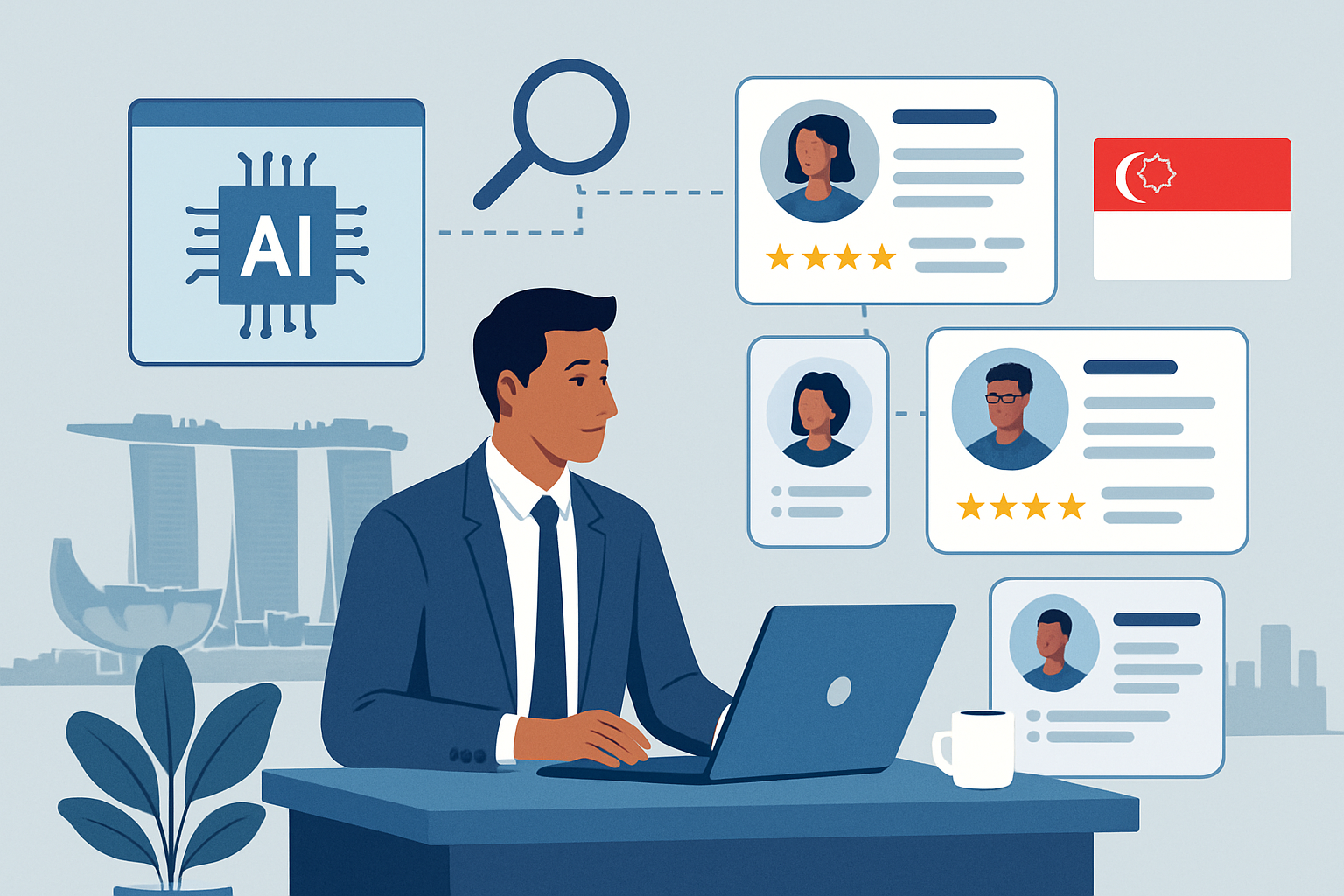

Using AI in Recruitment: A Practical Guide for Singapore Companies
AI in recruitment helps Singapore companies reduce time-to-hire, improve candidate matching accuracy, and automate repetitive screening tasks while maintaining compliance with local employment regulations. By integrating structured artificial intelligence tools into your hiring workflow, businesses can scale talent acquisition efficiently without sacrificing human oversight or regulatory standards. Related article
The 2026 Recruitment Landscape in Singapore
Singapore continues to operate as a regional talent hub where digital transformation dictates competitive advantage. Employers in 2026 face persistent skill shortages across technology, healthcare, logistics, and professional services sectors. Traditional manual screening processes no longer meet the speed and precision requirements of modern hiring cycles. Artificial intelligence has transitioned from experimental pilot projects to core operational infrastructure for mid-size and enterprise organizations alike.
Why Singapore Employers Are Accelerating AI Adoption
The shift toward intelligent recruitment stems from measurable efficiency gains and strategic workforce planning needs. Companies now expect instant candidate engagement, consistent evaluation standards, and detailed analytics across every stage of the hiring funnel. Automated systems handle high-volume intake phases while recruiters concentrate on relationship building and strategic decision making. Local firms also benefit from AI driven language processing that accommodates multilingual resumes common in Singapore professional markets.
Related: تأشيرة العمل في ماليزيا 2026 | دليل Employment Pas
Organizations adopting structured AI workflows report faster turnaround times, improved pipeline visibility, and stronger alignment between hiring managers and talent acquisition teams. The market rewards employers who combine technological efficiency with transparent communication and consistent candidate experiences.
Selecting the Right AI Recruitment Tools
Choosing appropriate software requires careful evaluation of functionality, security protocols, and integration capabilities. Not all platforms deliver equal value, and盲目 adoption often creates workflow bottlenecks rather than solving them. Recruitment leaders must define clear success criteria before initiating vendor trials or contract negotiations.
Evaluating Vendor Compatibility and Data Security
Start by mapping your existing applicant tracking system against proposed AI modules. Successful implementations rely on seamless data exchange rather than fragmented manual uploads. Request detailed documentation regarding encryption standards, server locations, and third party processor agreements. Verify that the platform supports REST APIs so your HRIS, calendar schedulers, and background verification vendors can communicate without duplication errors.
Related: تأشيرة العمل في سنغافورة 2026: Employment Pass وS
Demand transparency around algorithm training data and model update frequencies. Reputable providers publish white papers explaining feature development timelines and user feedback incorporation processes. Prioritize solutions that offer human in loop controls, allowing recruiters to override automated rankings when contextual judgment matters most.
Building an AI Augmented Hiring Workflow
Effective deployment follows a phased implementation strategy rather than overnight platform replacement. Structured workflows begin with job architecture refinement, proceed through intelligent sourcing, move into automated screening, and conclude with calibrated interviewing processes. Each phase requires distinct configuration settings and performance checkpoints.
Optimizing Candidate Sourcing with Intelligent Search
Modern recruitment platforms leverage machine learning to surface passive candidates who align with specific competency frameworks. Instead of manually scrolling through thousands of applications, recruiters can configure smart filters that prioritize verified certifications, bilingual proficiency, and industry relevant experience. When evaluating new talent pipelines, teams should explore curated listings such as jobs in Singapore to benchmark active demand and emerging skill gaps across sectors like fintech, healthcare, and sustainable infrastructure. This data driven approach ensures that outreach campaigns remain targeted rather than scattered.
Configure your sourcing dashboard to track source of hire attribution, enabling continuous budget allocation toward the highest converting channels. Update weekly to reflect shifting market conditions and seasonal hiring fluctuations typical of Singapore business cycles.
Automating Initial Screening Without Losing Personalization
AI screening tools can instantly rank applicants based on predefined competency matrices, freeing up recruiter hours for meaningful conversations. However, automation should never replace conversational tone or cultural alignment checks. Recruiters must establish clear scoring rubrics before deploying automated filters to prevent over reliance on keyword matching. Many organizations pair algorithmic shortlisting with standardized video assessments to maintain consistency across diverse applicant pools. If you are expanding your hiring capacity this quarter, remember that posting clearly defined roles through a streamlined process like post a job on DrJobPro reduces friction and improves response quality from day one.
Implement tiered review gates that route high potential candidates directly to senior interviewers while routing standard applicants into automated nurturing sequences. Maintain version control for all screening templates so adjustments remain traceable and auditable.
Navigating Singapore Regulations and Ethical Standards
Technology adoption must align with national employment frameworks and data protection mandates. Singapore maintains rigorous standards around fair hiring practices, employee privacy, and algorithmic accountability. Recruitment teams cannot treat AI as an autonomous decision maker because regulatory bodies expect documented human oversight at critical milestones.
Maintaining Compliance Under the PDPA and Tripartite Guidelines
The Personal Data Protection Act governs how candidate information is collected, stored, and processed. Organizations must obtain explicit consent before running automated background checks or storing biometric interview recordings. The Tripartite Alliance for Fair and Progressive Employment Practices provides additional guidance on avoiding discriminatory outcomes in digital hiring.
Document every automated screening decision alongside corresponding human validation steps. Allow manual override capabilities for candidates who request alternative evaluation pathways. Conduct quarterly bias audits comparing selection rates across demographic cohorts. Disclose AI usage to applicants during initial contact steps to uphold transparency expectations. Retain all hiring records according to MOM guidelines regardless of whether decisions were assisted by technology.
Preventing Algorithmic Bias in Multicultural Hiring
Singapore professional environments span multiple ethnic groups, age brackets, and language backgrounds. AI models trained on narrow historical datasets may inadvertently filter out qualified professionals who do not match conventional hiring patterns. Mitigation strategies require deliberate calibration and ongoing monitoring.
Regularly adjust weighting factors to emphasize demonstrated competencies over institutional pedigree. Remove proxy variables such as postal codes, university brand names, or employment gap durations that correlate strongly with protected characteristics. Validate selection outcomes against approved diversity benchmarks before scaling automated deployments. Partner with vendors who provide explainable AI dashboards so recruitment managers can justify every metric during internal audits or external reviews. Publish fairness commitments publicly to reinforce organizational integrity and attract mission aligned talent.
Measuring Performance and Scaling Your AI Strategy
Continuous improvement depends on disciplined metric tracking and structured feedback collection. Recruitment leadership must distinguish between vanity indicators and business impact measurements. Scaling successfully requires iterative refinement rather than static implementation.
Tracking Metrics That Actually Matter
Move beyond surface level reporting and focus on indicators that reflect tangible operational efficiency. Monitor conversion rates between application stages, measure interview to offer ratios, and analyze early turnover within ninety days of placement. Consistent reporting allows HR leaders to adjust AI parameters before minor drift becomes systemic bias. When evaluating which roles require advanced automation versus hands on sourcing, compare baseline productivity against recent hires made through digital channels versus traditional referrals. Candidates who actively engage with transparent processes often report higher satisfaction, which directly supports employer branding initiatives across competitive markets. Professionals looking to join forward thinking employers can easily search jobs on DrJobPro to identify organizations that publicly commit to structured, technology enhanced hiring practices.
Establish monthly performance reviews where recruitment managers present dashboard exports to executive stakeholders. Use these sessions to reallocate budgets, refine scoring models, and update job architecture based on actual candidate behavior data.
Continuous Improvement Through Feedback Loops
AI systems require periodic recalibration to remain accurate as market conditions evolve. Schedule dedicated review sessions between talent acquisition, data analysts, and department heads to evaluate placement quality and process friction points. Incorporate interviewer evaluations, candidate experience surveys, and hiring manager satisfaction reports into your optimization cycle. Update required competencies, eliminate outdated technical prerequisites, and adjust screening thresholds to reflect genuine business needs. Treat your recruitment stack as a dynamic ecosystem that demands attention rather than a set and forget configuration.
Invest in internal training programs that equip recruiters with analytical literacy and prompt engineering skills. Empower teams to test hypothesis driven adjustments rather than waiting for vendor updates. Document every modification, track resulting performance shifts, and archive successful variations for future reference.
Frequently Asked Questions About AI Recruitment in Singapore
Is it legal to use AI screening tools for hiring in Singapore?
Yes, Singapore permits AI assisted recruitment as long as organizations comply with the Personal Data Protection Act and adhere to the Tripartite Alliance for Fair and Progressive Employment Practices guidelines. Companies must ensure transparency, allow manual review options, and avoid discriminatory outcomes when automating candidate evaluation.
How does AI improve candidate matching accuracy compared to traditional methods?
Artificial intelligence analyzes structured skills, certifications, work history, and behavioral indicators simultaneously to generate precise compatibility scores. Unlike manual keyword searches, machine learning models continuously learn from successful placements and adjust ranking parameters to reflect real world performance data.
What steps should Singapore companies take to prevent bias in AI recruiting platforms?
Organizations should conduct regular algorithmic audits, exclude proxy variables that correlate with protected characteristics, and mandate human oversight for final hiring decisions. Publishing clear fairness policies and providing applicants with opt out mechanisms further strengthens ethical compliance across all recruitment stages.














