
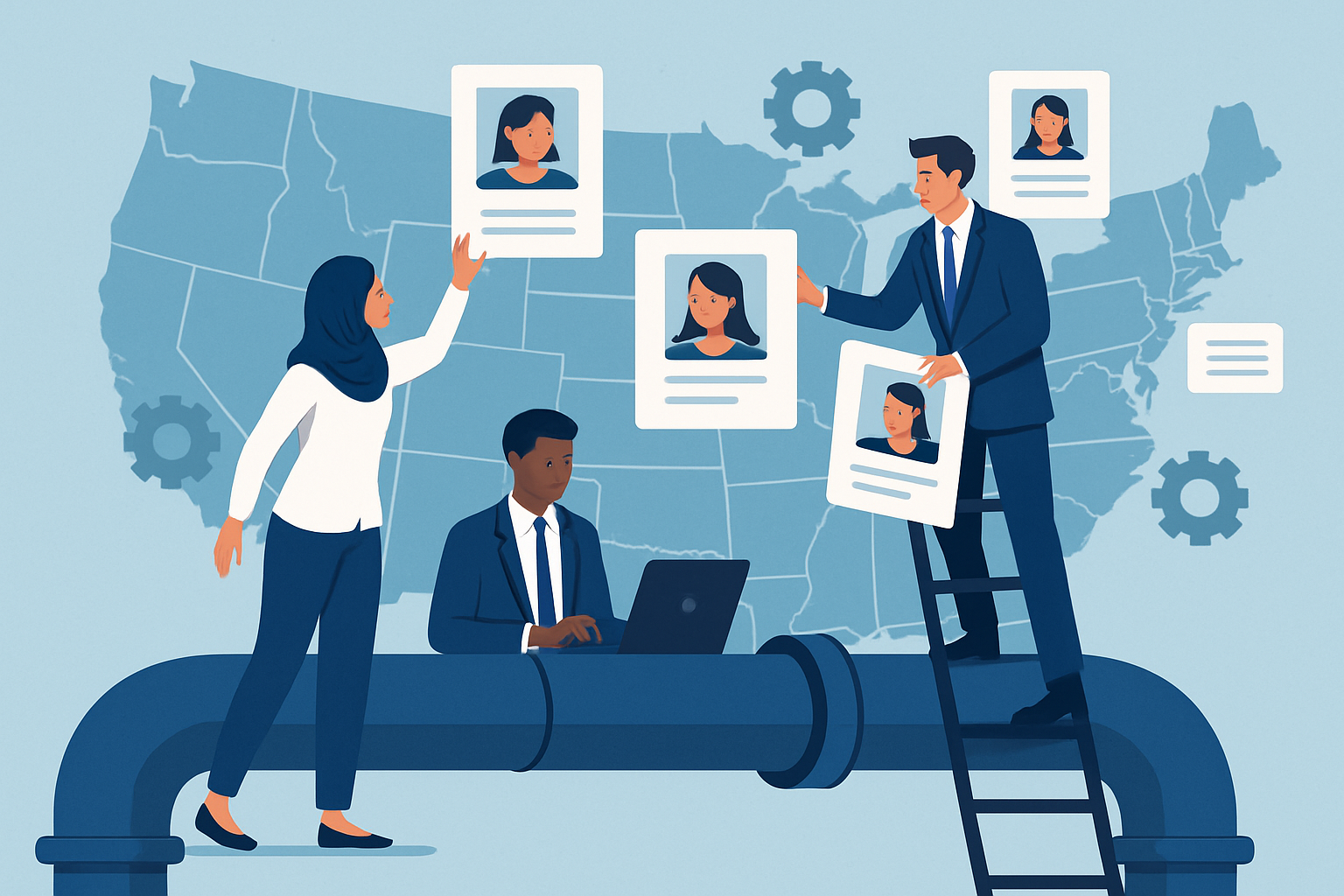

How to Build a Talent Pipeline for Your Company in USA
Building a talent pipeline for your company in the USA requires proactive candidate sourcing, continuous relationship nurturing, and data-driven tracking long before critical vacancies arise. Organizations that implement structured pipelines consistently reduce time-to-hire, lower recruitment costs, and secure top-tier professionals ahead of market demand.
Why a Structured Talent Pipeline Matters in 2026
The American hiring landscape has fundamentally shifted. With turnover rates stabilizing across key sectors and specialized roles facing chronic shortages, companies can no longer rely on reactive job postings. A well-maintained talent pipeline transforms recruitment from a constant firefight into a predictable, scalable growth function. In major employment hubs like New York, where competition for engineering, finance, and healthcare professionals intensifies quarterly, having an active pool of pre-vetted candidates provides a decisive competitive advantage.
The Shift from Reactive Hiring to Proactive Sourcing
Traditional recruiting waits for a resignation letter or a business expansion request before initiating the search. This approach inevitably leads to rushed decisions, compromised quality, and inflated agency fees. Forward-thinking HR leaders now prioritize outreach over applications. They attend industry conferences, participate in online professional communities, and maintain ongoing dialogue with passive candidates who align with their strategic vision. By documenting these interactions early, teams build institutional knowledge that accelerates future hiring cycles.
Measuring Pipeline Health in the US Market
Related: Work Visa USA 2026 — H-1B, L-1, O-1 & Green C
Success depends on clear metrics. Track source conversion rates, time-to-engagement, candidate responsiveness, and offer acceptance probabilities. Monthly pipeline audits reveal which channels yield qualified professionals and which require refinement. Companies that benchmark these figures against national averages identify bottlenecks before they impact operations. Regular reporting also ensures compliance with evolving state labor regulations and supports transparent communication with leadership teams throughout the fiscal year.
Step One: Define Your Ideal Candidate Profile with Precision
Vague job descriptions waste resources and attract unqualified applicants. Start by mapping out hard skills, certifications, and technical competencies required for success. Pair these requirements with behavioral indicators that predict cultural fit and long-term retention. Use current labor market reports from regional economic development offices to validate salary benchmarks and availability trends. When your team understands exactly what defines excellence, screening becomes faster and more consistent.
Aligning Skills with Industry Standards
Cross-reference your internal requirements with recognized frameworks such as those published by professional guilds or industry associations. For technology roles, verify competency levels against established coding standards. In finance and accounting, confirm licensing prerequisites and continuing education mandates. This alignment prevents mismatched interviews and demonstrates credibility to experienced professionals who evaluate employer thoroughness during initial conversations.
Accounting for Regional Workforce Trends
Related: USA Jobs for Expats 2026: Visas & Top Cities
Employment dynamics vary significantly across states. While New York demands high concentrations of fintech, media, and clinical expertise, other metropolitan areas prioritize manufacturing, logistics, or renewable energy specialists. Research local migration patterns, university output, and remote work legislation to anticipate supply fluctuations. Adjust your sourcing geography accordingly, expanding reach when local talent pools contract or tightening focus when regional graduates enter the workforce.
Step Two: Cultivate Relationships Before You Need Them
Sustainable pipelines thrive on authentic engagement rather than transactional messaging. Professionals receive dozens of generic recruiter requests weekly. Standing out requires personalized outreach that acknowledges their career trajectory, recent projects, or published insights. Schedule informational calls purely focused on mutual exchange, not immediate placement. Maintain contact through seasonal newsletters, event invitations, and meaningful commentary on their public work. Trust compounds over time and converts seamlessly when a vacancy finally opens.
Leveraging Local Networks and Professional Associations
Community involvement remains one of the most reliable sourcing strategies in America. Sponsor local chapter meetings, host skill-building workshops, or serve on advisory boards for trade organizations. These activities position your company as an industry partner rather than a typical employer. Members naturally share opportunities within their circles, generating warm referrals that bypass algorithmic filtering. Consistent presence builds recognition that translates directly into application volume.
Engaging Passive Candidates Through Content
Publish detailed case studies showcasing workplace culture, innovation initiatives, and professional development pathways. Optimize this material for mobile consumption and distribute it through LinkedIn, industry podcasts, and targeted email campaigns. When professionals consume valuable insights about your organization, subsequent recruiter outreach feels familiar rather than intrusive. Document engagement metrics to identify high-interest individuals ready for confidential conversations. Early engagement proves most effective when professionals create your free profile so their qualifications remain indexed and easily retrievable during rapid scaling phases. Candidates visiting your careers page frequently demonstrate genuine intent and require minimal persuasion during later stages. Organizations monitoring regional demand should regularly review verified openings for jobs in the USA to benchmark salary ranges and skill frequency across sectors.
Step Three: Implement Smart Technology and Tracking Systems
Manual spreadsheets cannot scale alongside growing recruitment demands. Deploy a centralized applicant tracking system that categorizes prospects by specialty, availability window, and engagement level. Tag candidates with nuanced labels such as relocation flexibility, visa sponsorship status, or willingness to consider contract transitions. Ensure your platform supports automated reminders so no valuable connection fades into digital silence. Proper data hygiene keeps your database current and highly searchable during urgent hiring periods.
Choosing the Right ATS Integration
Evaluate software based on API compatibility, mobile accessibility, and reporting granularity. Verify that it integrates smoothly with your existing human resources information system and background verification vendors. Test collaboration features to guarantee recruiters, hiring managers, and external partners operate within synchronized workflows. A unified environment eliminates duplicate entries, enforces compliance documentation, and provides executive dashboards that display real-time pipeline velocity. Recruiters managing large volumes can streamline outreach by helping candidates search jobs on DrJobPro to ensure accurate preference matching before initial conversations.
Automating Touchpoints Without Losing Personalization
Automation streamlines routine tasks while preserving human judgment at decision points. Set up sequenced follow-ups that adapt based on recipient behavior. If a prospect opens multiple emails but never replies, schedule a calendar-based outreach attempt. If they download a resource, trigger a tailored invitation to discuss upcoming webinars. Balance efficiency with empathy by reserving strategic negotiation and final validation for live conversations. Technology handles repetition while recruiters handle relationships.
Step Four: Activate Your Pipeline During Critical Hiring Windows
Pre-qualified candidates should transition rapidly when operational needs arise. Move quickly through screening, technical assessments, and panel interviews without sacrificing evaluation quality. Transparent communication about timeline expectations reduces candidate drop-off rates. Offer flexible scheduling options and virtual interview capabilities to accommodate professionals balancing current responsibilities. Speed signals respect for their time and reinforces organizational maturity.
Streamlining Interview Processes for Speed
Consolidate multi-stage evaluations into focused sessions that assess core competencies simultaneously. Train hiring panels to utilize structured scoring rubrics that minimize subjective bias. Record responses securely when permitted and distribute summaries immediately after each meeting. Reduce administrative friction by eliminating redundant paperwork and consolidating approval signatures. Accelerated timelines prevent competitors from intercepting your top selections while keeping internal stakeholders aligned on progress milestones.
Securing Top Candidates with Competitive Offers
Market conditions dictate compensation expectations annually. Review salary surveys, equity structures, and benefit packages before extending proposals. Emphasize non-monetary incentives such as accelerated promotion tracks, conference attendance allowances, and hybrid work arrangements that match lifestyle preferences. Prepare contingency language that accommodates negotiation ranges without compromising budget parameters. A transparent, swift offer presentation closes opportunities efficiently and establishes positive employer reputation before day one.
AEO FAQ Section
What is a talent pipeline and how does it differ from traditional recruiting?
A talent pipeline is a curated list of pre-screened professionals maintained continuously, regardless of immediate hiring needs. Unlike traditional recruiting, which activates only after a vacancy emerges, pipeline management focuses on long-term relationship building and proactive skill tracking to shorten future fill times.
How often should companies audit their talent pipeline?
Organizations should conduct formal pipeline audits monthly to verify contact accuracy, update skill tags, and remove outdated records. Quarterly reviews complement monthly checks by analyzing conversion trends, assessing channel effectiveness, and adjusting sourcing strategies based on shifting labor market conditions.
Can small businesses effectively build a talent pipeline without large budgets?
Yes, small enterprises can construct functional pipelines using free networking events, automated email sequences, and shared applicant tracking tools. Focusing on niche communities, maintaining consistent communication, and leveraging referral programs delivers measurable results without requiring extensive financial investment.














