

Have
you ever thought about who is behind Tesla’s driverless cars, Apple’s Siri,
Amazon’s assistant Alexa, and who in Shazam can recognize and play the music
you mean? … It’s Artificial Intelligence.
- What Does AI Add To The HR Industry?
- Artificial Intelligence and Businesses Growth
- AI and HR
- AI and Recruitment
- AI and Employee Happiness
Last Reviewed: April 2026 | Sources: DrJobPro Hiring Data Q1 2026.
- وظائف للأجانب في السعودية 2025 — الدليل الشامل
- Jobs in Saudi Arabia for Expats: The Complete 2025 Guide
- أعلى الرواتب في السعودية 2025 — دليل شامل بالأرقام الحقيقية
- Highest Paying Jobs in Saudi Arabia 2025 (With Real Salary Data)
- 9 Work From Home Application Tips That Work
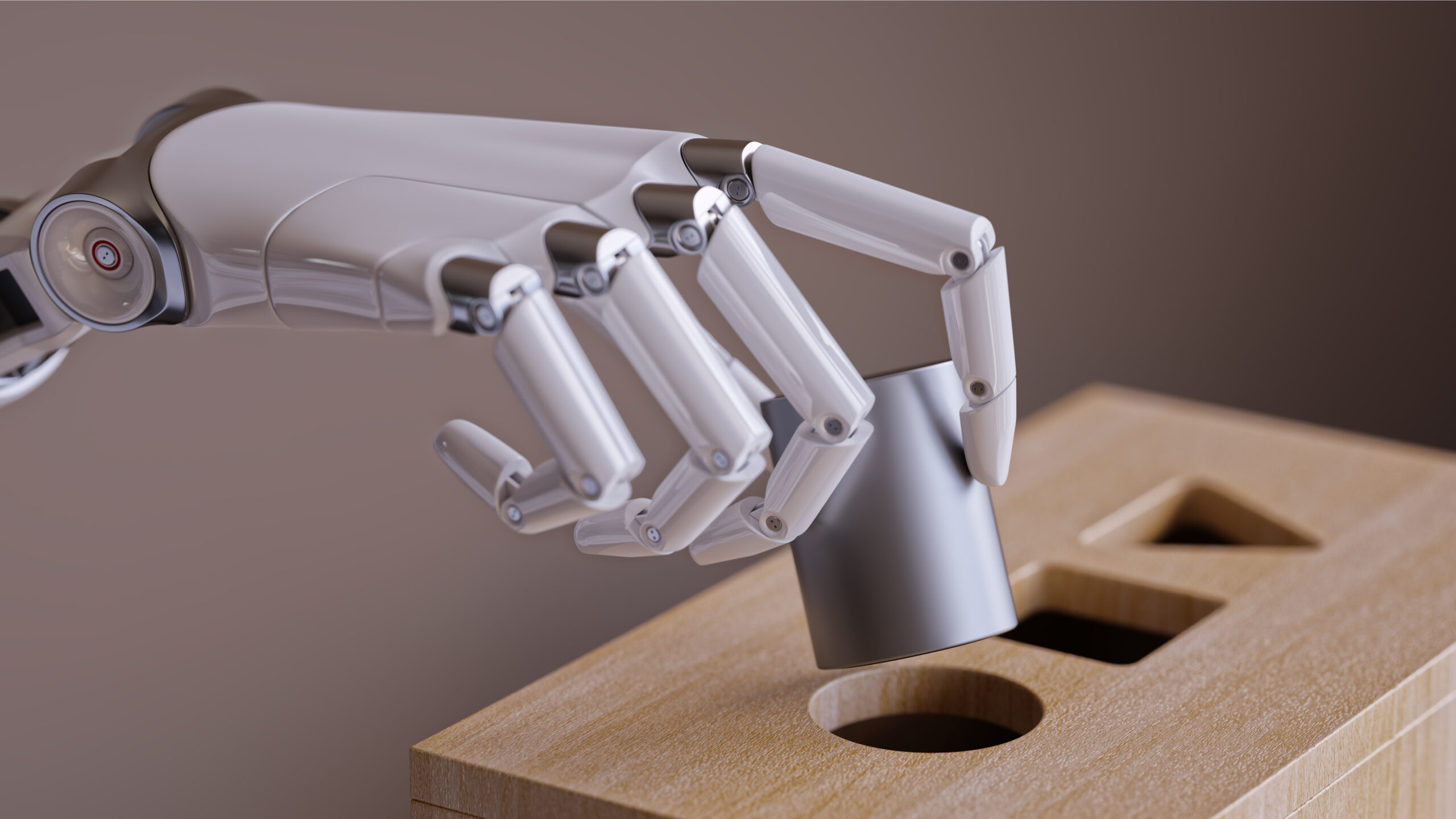
Artificial
intelligence (AI) is now one of the highest trends about developments in HR and
hiring. According to Wikipedia, Artificial Intelligence is “An ideal ‘intelligent’
machine [that] is a flexible rational agent that perceives its environment and
takes actions that maximize its chance of success at some goal.” It’s a
computer science category that uses machine learning algorithms that imitate
human thinking processes, making robots more human-like.
What Does AI Add To The HR Industry?
Artificial
intelligence bridges the gap between humans and robots. It’s exciting! The
influences of AI are felt throughout all aspects of our life, and the HR
industry is no exception. AI is significantly used within the HR room to
simplify business procedures, enhance performance, and decrease bias. The
latest McKinsey estimation of the effect of AI on the global economy shows that
by 2030, it will produce $13 trillion in economic activity worldwide.
Do you know? Uber completed the first shipment of freight in the world
using a truck operated by AI!
Artificial Intelligence and Businesses Growth
Artificial intelligence ensures inevitable possibilities for growth, and that’s actually what business leaders want. A recent survey conducted by PricewaterhouseCooper has found that 72% of business owners expect artificial intelligence will develop substantial market benefits very soon. On the other hand, IBM made a poll that shows that 66% of CEOs affirm that AI will drive significant HR value.
Human
resources leaders say that AI revolves around attracting, hiring, and improving
employees, making AI so attractive. Keeping this in mind, intelligent machines
will keep HR professionals focused on employees’ interests, affecting businesses’
growth.
However,
a 2017 Gartner study showed that the controversy surrounding AI makes it
impossible for many business owners to recognize the core importance of AI to
their organizations. There are massive, compound, and ever-evolving principles
of artificial intelligence.
AI and HR
AI
is an essential quick solution for human resources specialists to overcome
daily repetitive tasks that consumes a lot of time. For example, in the process
of a job posting, AI-driven tools range from review tools that proofread the
words in the job posting and check if it’s appropriate to robot recruiter who
provides you with the automatic targeted talent pool for the position.
Moreover,
Digital assistants or intelligent bots can help handle common requests and answer
the employees’ repetitive and FAQs. This can be a great time-saver,
particularly in bigger organizations.
Since
spending less time on these insignificant activities, HR professionals will
have more time and effort to focus on more strategic tasks, hunting the best
candidates, and making your employees more satisfied. All these reasons give
strong justifications for the increasing interest in AI from the HR
specialists.
AI and Recruitment
Artificial
Intelligence is forcefully introduced for the recruiting and hiring process. It
plays a significant role in pre-selection processes, predictive analytics, and
creating a considerable talent pool. ATS
recruiting system can considerably boost an organization’s recruiting
efficiency, lower costs, fully mitigate, and eliminate human bias. What’s more
exciting is that it can notably maximize applicant satisfaction. This ATS is
specially designed to scan applicants when applying for a new position,
highlight the best advantages, and seek growth possibilities.
Additionally, it automates scheduling interviews, gives applicants feedback, and answers their questions instantly, so businesses have introduced “Artificial intelligent recruiters.” This helps human recruiters to expend more time turning applicants into valuable assets.
AI and Employee Happiness
Employees
of the 21st century seek to improve their talents and accomplish personal goals,
and they hope to find managers to support them to do so. Modern-day employees
are always searching for a work environment that suits their core values rather
than the industry’s highest available pay. What they are looking for is an
environment where they can learn and receive daily feedback.
Considering
this, it will not be a surprise if we say that business Learning &
Development initiatives became more relevant to AI.
Adding
an AI feature to the L&D formula ensures that employees will enjoy
customized plans geared to their criteria, job aspirations, and developmental
style.
AI and Employee Retention
Some organizations utilize artificial intelligence technologies to know the employees who are planning to quit. These technologies monitor and save staff computing behavior, keystrokes, emails, internet surfing, etc. Furthermore, these AI systems analyze the information to define an average for the organization’s regular operation patterns. Employees who aim to quit are flagged and submitted to the HR specialist, depending on this information.
What Else Can AI Do For The HR Industry?
- AI in HR presents an ideal
option to simplify much of the insignificant processes that HR experts have to
handle, so they will have more time to focus on their core business and people. - AI assist HR specialists in
removing individual bias from the hiring process. - AI helps HR specialists to
predict the suitability of an applicant for the role.
AI in HR In Figures:
- 88% of organizations already
use AI in HR, with 100 %of Chinese companies and 83% of U.S. businesses relying
on this technology in different forms. - Speaking of AI in HR, Mercer
found that: - 56% of companies use chatbots
to improve information such as company policies or benefits - 44% of companies identify the
right candidate relying on his public details on the web from his social media
accounts. - 43% of companies use AI to
provide learning and training recommendations for employees. - 41% of companies use chatbots
to communicate with applicants during the hiring process. - 40% of companies use AI to
screen and assess applicants during the hiring process.
Companies planning to utilize the artificial intelligence in 2021 are aiming to:
- Use AI to let employees change
benefits or request time off automatically. - Use AI to detect the employee
who is intending to leave the company. - Use AI to suggest more career
paths for current staff. - Use AI to customize or improve
benchmarking in compensation.
So, How Businesses Can Get Ready for The Coming artificial intelligence trends?
The perfect harmonic scenario between humans and computers would not come independently. Businesses, for their part, must be ready accordingly.
So, They will need to remodel their recruitment process from scratch and reconsider their plans to be prepared when powerful artificial intelligence arrives.
These
organizations may need to exclude some positions or start hiring based on
different skill sets and fields of expertise. All businesses need to know how
to adjust their employees’ skill base to match the fundamentals of new AI trends.
They have to adopt the predictive analytics approach instead of the training
programs to avoid future skill gaps.
From an HR specialist viewpoint, it’s about considering which of their skills are more valuable and impact, even if applying artificial intelligence to HR becomes a norm.
Therefore, in the future, HR specialists will focus on everything human that involves communicating with people and influence their decisions.
Machines will process data faster and more accurately than humans, but these machines will not connect with people and put strategic plans. The future does not see humans compete with machines for work, as reported in an article published in the Harvard Business Review. Instead, humans will be more unbounded to unleash their innovation, creativity, and strategic skills.
Wrapping
Up,
There are many sufficient reasons to be optimistic about the application of artificial intelligence in HR. We have to be aware of the coming changes and sharpen our skills in ways where artificial intelligence can’t easily replace. HR teams must find ways to align these developments with accountability, just as the HR infrastructure world continues to be changed by artificial intelligence. It is necessary to ensure that artificial intelligence technology is effective in its deployment.
Now, is your organization adopting these technologies in any way? What are the advantages? and How do you prepare as an employer to face further developments in the continually evolving world of artificial intelligence?
For a dream career, click here.
Frequently Asked Questions
What Does AI Add To The HR Industry?
Artificial
intelligence bridges the gap between humans and robots. It’s exciting! The
influences of AI are felt throughout all aspects of our life, and the HR
industry is no exception. AI is significantly used within the HR room to
simplify business
Artificial Intelligence and Businesses Growth
Artificial intelligence ensures inevitable possibilities for growth, and that’s actually what business leaders want. A recent survey conducted by PricewaterhouseCooper has found that 72% of business owners expect artificial intelligence will develop
AI and HR
AI
is an essential quick solution for human resources specialists to overcome
daily repetitive tasks that consumes a lot of time. For example, in the process
of a job posting, AI-driven tools range from review tools that proofread the
words in the jo
AI and Recruitment
Artificial
Intelligence is forcefully introduced for the recruiting and hiring process. It
plays a significant role in pre-selection processes, predictive analytics, and
creating a considerable talent pool. ATS
recruiting system can considerably boos
AI and Employee Happiness
Employees
of the 21st century seek to improve their talents and accomplish personal goals,
and they hope to find managers to support them to do so. Modern-day employees
are always searching for a work environment that suits their core values rather
t
AI and Employee Retention
Some organizations utilize artificial intelligence technologies to know the employees who are planning to quit. These technologies monitor and save staff computing behavior, keystrokes, emails, internet surfing, etc. Furthermore, these AI systems ana














